


I have varied interests.
TWO spent a lot of time thinking this weekend. Here are some musings:
1) The Masters. Is there any other sport where the fans dress exactly like the athletes? Golfers all have their own style, from the understated, to the full-vest/visor accoutrement ensemble, to the late great Payne Stewart, who did his own thing. Here Payne appears to be playing golf for the Chicago Bears. I miss Payne Stewart.
But back to the issue. So I will accept the actual golfers wearing whatever they feel they need to to compete. But why is it necessary for fans (ignore numbering) to dress the same way? Yeah, honey - I've got tickets to the Masters...have you seen my golf pants, three button shirt, functionless golf vest and PING sun visor - I should probably bring my glove too, just in case.
Its as if each fan is hoping that, against all odds, Phil Mickelson might turn to them in the gallery and say - "Hey... you...yeah....you look like you know golf. Why don't you come out here and talk to me about this next hole. Hell - do you want to hit for me?"
"Why YES! Its a good thing I wore all my golf gear!"
Can you imagine this in any other sport? Do you see fans at a basketball game wearing high tops, ankles taped, headbands on, mouth guards in? Are women in the stands at Wimbledon wearing wristbands and tennis skirts - like a tennis match could break out at any point on their way to the ladies room and concession stand?
2. Economics. Two things interested TWO this weekend: price stickiness and stock market projections.
First, free market proponents (of which TWO is one) hail the ability of prices to fluctuate relatively quickly to reflect market conditions. However there are some areas where this does not happen. One area - a particularly troubling one - is commercial real estate. In New York City for example, where unemployment is skyrocketing, incomes and spending are falling, and businesses are failing, one would expect that rents charged to commercial tenants would decrease across the board. They have not. Many landlords have increased their rents up to 6%. As a result, businesses are closing their doors all over the city. Why?
The answer is that commercial rents typically lag well behind residential rents. Most of the commercial landlords have earned so much money from rents over the life of their holdings, that they can afford to receive no rent for extended periods of time. Banking on the fact that the economy will recover eventually, these landlords would rather get nothing for a year or so than lower rents and lock themselves into a 10 year lease at a rate that will be, in a few years, viewed as beneath market value.
While the landlords' behavior could be viewed as rational on a certain time horizon, it undeniably acts to sink us deeper into recession. TWO knows of a number of entrepreneurs interested in starting new businesses that have not been able to because of unreasonably high rents. The aggregated effects of this are immense when one considers that more than half (51% in 2004) of all employed people work for small businesses (defined as companies with less than 500 employees).
Second, many of you may have heard about investment houses issuing internal projections of 10% or more gains in equities by the end of 2009. Many think that this signals the beginning of the end of the economic downturn. They should think again.
Increases in equities can not be viewed outside of the context of money supply and spending levels. The deficit is already nearly $1 trillion, only half way through 2009. This is two times the highest-ever annual deficit. Barring increases in actual production, all of this spending - mostly funded by simply printing more money - will manifest itself in inflation. Inflationary periods are typically times when the bond market suffers (creditors are hurt and debtors are helped) and equity markets can do well, in nominal terms. However, in real terms, there is no reason to think that equity gains - if any - will signify any actual improvement in our economy - and in fact there is some reason to think that it might signify a dangerously inflation.
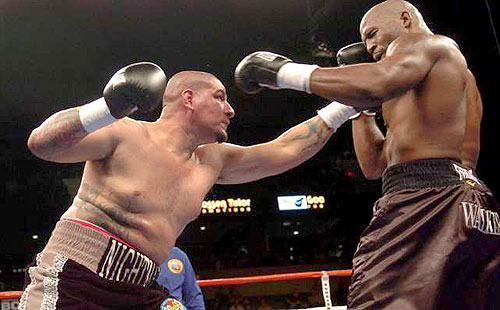
3. Boxing. Three things. First, Paul Williams, who dominated Winky Wright on Saturday, should never lose a fight. He is a 6 foot 2 inch boxer who fights anywhere from 147 - 160. He has an 82 inch wingspan and throws over 100 punches a round. He was - somehow - upset in one fight (in the re-match Williams avenged his loss with a devastating 1st round knockout). But that fluke aside, this guy should beat everyone at 147 and 154 and possibly even 160 (although Kelly Pavlik could be a tough matchup). Look for Williams and light-heavyweight Chad Dawson (with honorable mention to welterweight Andre Berto) to be the next great American boxing stars.
I purposely did not mention Chris Arreola. I am a Chris Arreola fan - he has an aggressive and fan-friendly style in the ring and star quality (complete with amazing interviews) outside of it. But before Arreola can convince me that he is ready to be the Mexican Tyson, he will have to show up for big fights in better shape. Additionally, Arreola takes a lot of hits. It is unclear how he would fare against a Klitschko were the fight to go into the late rounds and stamina became a factor.
Third, is there any sports show better than 24/7? The new series, of course, is about Hatton and Pacquioa's May 2nd fight. My view: I would short Pacman. I think Pacman's value is a bit inflated because of his domination of a frail Oscar De La Hoya. And because of exaggerated odds, Hatton might be the better bet. Look for odds to narrow closer to fight night.
In conclusion, I could out-box most economists.
Showing posts with label commentary. Show all posts
Showing posts with label commentary. Show all posts
Monday, April 13, 2009



Monday, March 30, 2009
College Basketball Ombudsman: Mid Majors Take 2
TWO's longtime friend, frequent debate loser and sometime muse, Gus Johnson's Whisper, wrote a blog entry countering TWO's previous entry arguing for more mid-majors in the NCAA tournament. GJW, for reasons known only to him, screamed like a school girl during a Jonas Brothers sighting when he learned of the inclusion of Arizona, Maryland and Wisconsin in the tournament field. Humorous similes aside, GJW is a fan of the Jonas Brothers. Just stating facts here.
I will attempt to summarize his argument so that you will not have to wade through the general incoherence and disorganization of his piece. It essentially breaks down into a few ideas:
- He breaks up mid-majors into two categories, mid majors from the A-10 and "Boppers" (bottom-toppers) which are good teams from terrible conferences.
- He shows that in this and in previous years, most of the final 4, final 8 and final 16 were teams from BCS conferences, not "Boppers".
- He shows that a high percentage of "Bopper" teams do not make any sort of tournament runs, and that Arizona, Maryland, Wisconsin and Michigan (this year's questionable at-large teams) each won at least one game.
- He propounds that, in some years, when the BCS conferences are down, midmajors deserve more bids, but this year was not one of those years.
Unfortunately for GJW, his argument, in addition to following no known logical progression, is also mostly unresponsive to mine.
First of all, trying to remove Xavier and Temple from the ranks of mid-major is a bit self-serving, but ultimately inconsequential for this discussion.
Second, the fact that the teams advancing in the tournament are mostly BCS schools should suprise no one. Generally the very best teams are from BCS conferences. They get the most bids. In a bad year for BCS schools, they get 24 of the 34 at-large bids, and in a good year (like this one) they get 30 out of the 34. It makes sense that there would be more BCS schools advancing deep into the tournament. At no point was TWO arguing that midmajors, or a high percentage of midmajors, will be regularly advancing to the Final 4.
The argument, rather, is about teams on the margins. Bubble BCS teams vs Bubble midmajor teams. When the selection committee had 4 remaining at-large selections (having given out 26 of the previous 30 to BCS schools), they had a choice between BCS teams like Arizona, Wisconsin and Maryland and midmajors like Creighton, St. Mary's and Davidson.
Why should they have picked the latter?
1) The NCAA selection committee has a responsibility to pick a field for the tournament that will both provide an opportunity for the top teams to play and be enjoyable for students, fans, and the viewing public.
2) The BCS teams have proven, beyond a doubt, that they are not top teams. There is plenty of information available to suggest that these schools will not get very far in the tournament. When you play 16 ACC games and lose 9 of them, as Maryland did, sure, you might have a good game and beat a 7th seed, but then you will do as you did all season long, and get handled by a top team (Memphis blew out Maryland in the next round).
3) The midmajors - or Boppers - are more mysterious, but are likely not top teams either. They have not played as much top competition. There is a strong likelihood that these schools will, like the BCS bubble teams, get handled early in the tournament. GJW correctly points out that only one or two midmajors, if any, make significant tournament runs each year.
4) Because of the lack of information on midmajors, however, once every couple of years there is a midmajor team drastically, drastically undervalued that actually is a top team. Davidson - which in 2006 lost to eventual national champion Kansas by 2 points in the Elite 8 - was a 10 seed. George Mason made it to the final 4 in 2006 as an 11 seed and, prior to their run, were famously told that they "didn't belong" in the tournament by Billy Packer.
5) Somewhat more sentimentally, the public LOVES Cinderella runs and upsets, no matter the sport. No one, not even graduates of the school, will remember that Arizona beat Utah and Cleveland State and then got beaten by 40 points by Louisville, but everyone remembers Cinderella runs of Davidson and George Mason. I don't think its unrelated that this is widely considered the most boring NCAA tournament in recent years.
6) Because choosing BCS bubble schools over midmajor bubble schools risks that a top team will not make the tournament (even if this is the case only once every two or three years), while the reverse choice does not run any comparable risk, coupled with the enjoyment fans get out of seeing smaller schools play against big schools leads me to once again aver that the NCAA Selection Committee should select more midmajor at-large teams.
If anyone is wondering what trip you just took with me over the last 6 paragraphs, its called a logical progression.
This weekend's upset prediction: Michigan State over UConn. Thabeet gets in foul trouble.
In conclusion, Dr. Octagon was GJW's pediatrician during his formative years.
I will attempt to summarize his argument so that you will not have to wade through the general incoherence and disorganization of his piece. It essentially breaks down into a few ideas:
- He breaks up mid-majors into two categories, mid majors from the A-10 and "Boppers" (bottom-toppers) which are good teams from terrible conferences.
- He shows that in this and in previous years, most of the final 4, final 8 and final 16 were teams from BCS conferences, not "Boppers".
- He shows that a high percentage of "Bopper" teams do not make any sort of tournament runs, and that Arizona, Maryland, Wisconsin and Michigan (this year's questionable at-large teams) each won at least one game.
- He propounds that, in some years, when the BCS conferences are down, midmajors deserve more bids, but this year was not one of those years.
Unfortunately for GJW, his argument, in addition to following no known logical progression, is also mostly unresponsive to mine.
First of all, trying to remove Xavier and Temple from the ranks of mid-major is a bit self-serving, but ultimately inconsequential for this discussion.
Second, the fact that the teams advancing in the tournament are mostly BCS schools should suprise no one. Generally the very best teams are from BCS conferences. They get the most bids. In a bad year for BCS schools, they get 24 of the 34 at-large bids, and in a good year (like this one) they get 30 out of the 34. It makes sense that there would be more BCS schools advancing deep into the tournament. At no point was TWO arguing that midmajors, or a high percentage of midmajors, will be regularly advancing to the Final 4.
The argument, rather, is about teams on the margins. Bubble BCS teams vs Bubble midmajor teams. When the selection committee had 4 remaining at-large selections (having given out 26 of the previous 30 to BCS schools), they had a choice between BCS teams like Arizona, Wisconsin and Maryland and midmajors like Creighton, St. Mary's and Davidson.
Why should they have picked the latter?
1) The NCAA selection committee has a responsibility to pick a field for the tournament that will both provide an opportunity for the top teams to play and be enjoyable for students, fans, and the viewing public.
2) The BCS teams have proven, beyond a doubt, that they are not top teams. There is plenty of information available to suggest that these schools will not get very far in the tournament. When you play 16 ACC games and lose 9 of them, as Maryland did, sure, you might have a good game and beat a 7th seed, but then you will do as you did all season long, and get handled by a top team (Memphis blew out Maryland in the next round).
3) The midmajors - or Boppers - are more mysterious, but are likely not top teams either. They have not played as much top competition. There is a strong likelihood that these schools will, like the BCS bubble teams, get handled early in the tournament. GJW correctly points out that only one or two midmajors, if any, make significant tournament runs each year.
4) Because of the lack of information on midmajors, however, once every couple of years there is a midmajor team drastically, drastically undervalued that actually is a top team. Davidson - which in 2006 lost to eventual national champion Kansas by 2 points in the Elite 8 - was a 10 seed. George Mason made it to the final 4 in 2006 as an 11 seed and, prior to their run, were famously told that they "didn't belong" in the tournament by Billy Packer.
5) Somewhat more sentimentally, the public LOVES Cinderella runs and upsets, no matter the sport. No one, not even graduates of the school, will remember that Arizona beat Utah and Cleveland State and then got beaten by 40 points by Louisville, but everyone remembers Cinderella runs of Davidson and George Mason. I don't think its unrelated that this is widely considered the most boring NCAA tournament in recent years.
6) Because choosing BCS bubble schools over midmajor bubble schools risks that a top team will not make the tournament (even if this is the case only once every two or three years), while the reverse choice does not run any comparable risk, coupled with the enjoyment fans get out of seeing smaller schools play against big schools leads me to once again aver that the NCAA Selection Committee should select more midmajor at-large teams.
If anyone is wondering what trip you just took with me over the last 6 paragraphs, its called a logical progression.
This weekend's upset prediction: Michigan State over UConn. Thabeet gets in foul trouble.
In conclusion, Dr. Octagon was GJW's pediatrician during his formative years.
Tuesday, February 17, 2009
CSPAN Ombudsman: Ranking Presidents, Roxette
Who's the best?
In response to overwhelming public demand, CSPAN got 65 historians to take time off from their schedules to let Americans know which Presidents have been the best. A helpful article accompanies this with the breaking news that Lincoln is the top rated President. See also http://www.cnn.com/2009/POLITICS/02/16/presidential.survey/index.html .
I realize that we have somehow developed into a ranking society, where every show on E! and VH1 is a countdown of some kind, but the idea that a) Americans need their Presidents ranked for them and b) these rankings are definitive in any way is absurd.
As an indication of how silly this is, please read an actual excerpt: "....Bill Clinton jumped six spots from No. 21 to 15. Other recent presidents moved positions as well: Ronald Reagan advanced from No. 11 to 10, George H.W. Bush from No. 20 to 18 and Jimmy Carter fell from No. 22 to 25." Now read that again in Casey Kasem's voice, and replace Bill Clinton with Richard Marx, Ronald Reagan with Boy Meets Girl, Bush with The Bangles and Carter with Roxette, and this could be a 1989 American Top 40 transcript. But why are these Presidents advancing and falling? Either they were good or they weren't, but their performances haven't changed. What has George Washington done to deserve being dropped in the rankings? The explanation that "Today's concerns shape our views of the past..." by one of the historians does more to discredit the rankings than explain them... to judge Thomas Jefferson's presidency in light of, for example, the 2009 financial crisis, is the height of anachronism and revisionist history.
Second, and I won't go overboard in analysis here...but a couple of the rankings were very surprising. John F. Kennedy ranking 7th, ahead of Jefferson, Eisenhower, Wilson and Reagan is absurd. Kennedy was (tragically) only able to serve 3 years, and during that time did not have a particularly stellar record (see, eg the Bay of Pigs Fiasco). It is hard to defend his 3 year performance as exceeding that of so many well regarded two term presidents. Second, Jimmy Carter ranking 25th, essentially middle of the pack, is even more egregious. Jimmy Carter steered the country towards a period of high unemployment, low growth and dangerously high inflation. He received epicly low approval ratings and was internationally embarrassed by the Iran Hostage Crisis. Carter managed to win only 6 states and the District of Columbia in his 1980 reelection bid. However, Carter was ranked ahead of people like Richard Nixon (who, while far from perfect, served two terms and was popular enough to win his reelection in one of the greatest landslides in American history), Zachary Taylor (who had an effective Presidency shortened by death) and James Garfield (who only served for four months and didn't have time to lead the nation into ruin, like Carter did).
More importantly, I would like to announce that CSPAN will be teaming with VH1 to create the following jointly produced shows, to air on both networks:
1) Top 10 Totally Unbelievable Invasions. Hosted by Daisey Fuentes, historians rank various sneak attack military operations, from the fall of Troy to Quantrill's Raiders to Normandy as Michael Ian Black ("I mean, to the Germans, Eisenhower is like the anti-David Hasselhoff!!! And so is Omar Bradley!"), among others, provide commentary. Into and out of commercial breaks, the chorus to EMF's Unbelievable plays as the show's title graphic appears. From the actual show transcript...Historian: "After Ghengis Khan's invasion of Volga Bulgaria, he set his sights on Hungary, after physically crushing Russian princes to death under his eating platform" Sinbad: "DAMN!"
2) Top 30 Most Influential Christians. With quick cuts and Swizz Beatz tracks playing in the background, CSPAN/VH1 counts down through St. Augustine, various Popes, St. Peter and others. Spoiler Alert! Jesus falls one spot to #2 as host Giuliana Rancic explains that, quite simply, Jesus' name recognition has been diluted by the sheer number of Mexican boxers of the same name ("Dios Mio!" quips celebrity commenter George Lopez). Some Christian leaders attending a pre-screening have questioned Apostle Paul's #1 ranking, contending that Jesus is the central figure in their religion, but CSPAN/VH1 stands by its rating process.
3) All Access: 20 Most Controversial Supreme Court Decisions. Brooke Burke is all about controversy as she counts down an explosive list of court cases with comments from a star-studded group of celebrities. The list is comprehensive, from Plessy v. Ferguson ("That $#!* was %@#*@# up" - Ice T) to Roe v. Wade ("YEAH!" - Linda Perry) to, of course, Church of Lukumi Babalu Aye v. City of Hialeah ("That ordinance was neutral but was improperly motivated and thus had to be narrowly tailored to meet a compelling governmental interest!" - Tracy Morgan).
In conclusion, Roxette is a severely underrated 80s band.
In response to overwhelming public demand, CSPAN got 65 historians to take time off from their schedules to let Americans know which Presidents have been the best. A helpful article accompanies this with the breaking news that Lincoln is the top rated President. See also http://www.cnn.com/2009/POLITICS/02/16/presidential.survey/index.html .
I realize that we have somehow developed into a ranking society, where every show on E! and VH1 is a countdown of some kind, but the idea that a) Americans need their Presidents ranked for them and b) these rankings are definitive in any way is absurd.
As an indication of how silly this is, please read an actual excerpt: "....Bill Clinton jumped six spots from No. 21 to 15. Other recent presidents moved positions as well: Ronald Reagan advanced from No. 11 to 10, George H.W. Bush from No. 20 to 18 and Jimmy Carter fell from No. 22 to 25." Now read that again in Casey Kasem's voice, and replace Bill Clinton with Richard Marx, Ronald Reagan with Boy Meets Girl, Bush with The Bangles and Carter with Roxette, and this could be a 1989 American Top 40 transcript. But why are these Presidents advancing and falling? Either they were good or they weren't, but their performances haven't changed. What has George Washington done to deserve being dropped in the rankings? The explanation that "Today's concerns shape our views of the past..." by one of the historians does more to discredit the rankings than explain them... to judge Thomas Jefferson's presidency in light of, for example, the 2009 financial crisis, is the height of anachronism and revisionist history.
Second, and I won't go overboard in analysis here...but a couple of the rankings were very surprising. John F. Kennedy ranking 7th, ahead of Jefferson, Eisenhower, Wilson and Reagan is absurd. Kennedy was (tragically) only able to serve 3 years, and during that time did not have a particularly stellar record (see, eg the Bay of Pigs Fiasco). It is hard to defend his 3 year performance as exceeding that of so many well regarded two term presidents. Second, Jimmy Carter ranking 25th, essentially middle of the pack, is even more egregious. Jimmy Carter steered the country towards a period of high unemployment, low growth and dangerously high inflation. He received epicly low approval ratings and was internationally embarrassed by the Iran Hostage Crisis. Carter managed to win only 6 states and the District of Columbia in his 1980 reelection bid. However, Carter was ranked ahead of people like Richard Nixon (who, while far from perfect, served two terms and was popular enough to win his reelection in one of the greatest landslides in American history), Zachary Taylor (who had an effective Presidency shortened by death) and James Garfield (who only served for four months and didn't have time to lead the nation into ruin, like Carter did).

More importantly, I would like to announce that CSPAN will be teaming with VH1 to create the following jointly produced shows, to air on both networks:
1) Top 10 Totally Unbelievable Invasions. Hosted by Daisey Fuentes, historians rank various sneak attack military operations, from the fall of Troy to Quantrill's Raiders to Normandy as Michael Ian Black ("I mean, to the Germans, Eisenhower is like the anti-David Hasselhoff!!! And so is Omar Bradley!"), among others, provide commentary. Into and out of commercial breaks, the chorus to EMF's Unbelievable plays as the show's title graphic appears. From the actual show transcript...Historian: "After Ghengis Khan's invasion of Volga Bulgaria, he set his sights on Hungary, after physically crushing Russian princes to death under his eating platform" Sinbad: "DAMN!"
2) Top 30 Most Influential Christians. With quick cuts and Swizz Beatz tracks playing in the background, CSPAN/VH1 counts down through St. Augustine, various Popes, St. Peter and others. Spoiler Alert! Jesus falls one spot to #2 as host Giuliana Rancic explains that, quite simply, Jesus' name recognition has been diluted by the sheer number of Mexican boxers of the same name ("Dios Mio!" quips celebrity commenter George Lopez). Some Christian leaders attending a pre-screening have questioned Apostle Paul's #1 ranking, contending that Jesus is the central figure in their religion, but CSPAN/VH1 stands by its rating process.
3) All Access: 20 Most Controversial Supreme Court Decisions. Brooke Burke is all about controversy as she counts down an explosive list of court cases with comments from a star-studded group of celebrities. The list is comprehensive, from Plessy v. Ferguson ("That $#!* was %@#*@# up" - Ice T) to Roe v. Wade ("YEAH!" - Linda Perry) to, of course, Church of Lukumi Babalu Aye v. City of Hialeah ("That ordinance was neutral but was improperly motivated and thus had to be narrowly tailored to meet a compelling governmental interest!" - Tracy Morgan).
In conclusion, Roxette is a severely underrated 80s band.
Wednesday, January 14, 2009
Pop Culture Ombudsman: The City starring Vanessa Hudgens
The most shameful thing the Ombudsman does is watch The City on MTV. What.
But as the World's Ombudsman, I want to make two things clear.
First, MTV has a responsibility to its viewers to disclose how much is scripted. This is not a true reality show in that some of it (much of it?) seems scripted to push forward certain story lines. Why do I suspect this? One main reason: never has one guy met his buddy specifically to discuss the vague contours of his relationship with a girl. One of my best friends had a girlfriend for a year and I didn't know her name. True story. I also recently learned from some lady friends that the girls' conversations on The City are equally ridiculous. I didn't realize this, as I had always assumed that girls spent most of their time together staring and having stilted conversations about their feelings. Not true, apparently, according to actual girls. But back to the broader point... can a TV station call anything it wants a reality show? Its as if the only burden that must be met is that the characters use their real names. Oh, Mark and Bronson instead of Larry and Balki? Done. Perfect Strangers is now a reality show.
Second, there's far too much Meat Packing District. Since about 1/3 of The City is just panned shots from a helicopter or the occasional stock clip of cabs on the street, and another 1/3 of the City is commercials, that leaves only 10 minutes of actual show. 8 of these 10 minutes occur in the Meat Packing District. Now I understand that DVF (DIANE VON FURSTENBERG!!!!!) is in meat packing...but why do the dates have to be there? why not some east village? lower east side? The Meat Packing District is the capital of faux-luxury and clubbiness. Why would a first date ever take place there? As a guy, what tone are you trying to set? "Girl...I'll take you to 5 9th tonight...and if things go well, in a couple of weeks we could be getting bottle service at Cielo, with me pouring you a too-strong Belvedere red bull, with ice that I scooped up with my hands... or, if we don't get into Cielo, we could be next door at Revel, talking about how we're not into that scene anyway...yeah girl." Hopefully you read that in a Barry White voice. If not, listen to this and go back and read it again while the track plays.
In conclusion, I am keeping my fingers crossed for an eventual fist fight involving the Australian and his iced out roommate, a break up and prurient rebound by Erin, and perhaps a brief kiss between Olivia and Chuck Bass. Is that realistic?
But as the World's Ombudsman, I want to make two things clear.
First, MTV has a responsibility to its viewers to disclose how much is scripted. This is not a true reality show in that some of it (much of it?) seems scripted to push forward certain story lines. Why do I suspect this? One main reason: never has one guy met his buddy specifically to discuss the vague contours of his relationship with a girl. One of my best friends had a girlfriend for a year and I didn't know her name. True story. I also recently learned from some lady friends that the girls' conversations on The City are equally ridiculous. I didn't realize this, as I had always assumed that girls spent most of their time together staring and having stilted conversations about their feelings. Not true, apparently, according to actual girls. But back to the broader point... can a TV station call anything it wants a reality show? Its as if the only burden that must be met is that the characters use their real names. Oh, Mark and Bronson instead of Larry and Balki? Done. Perfect Strangers is now a reality show.
Second, there's far too much Meat Packing District. Since about 1/3 of The City is just panned shots from a helicopter or the occasional stock clip of cabs on the street, and another 1/3 of the City is commercials, that leaves only 10 minutes of actual show. 8 of these 10 minutes occur in the Meat Packing District. Now I understand that DVF (DIANE VON FURSTENBERG!!!!!) is in meat packing...but why do the dates have to be there? why not some east village? lower east side? The Meat Packing District is the capital of faux-luxury and clubbiness. Why would a first date ever take place there? As a guy, what tone are you trying to set? "Girl...I'll take you to 5 9th tonight...and if things go well, in a couple of weeks we could be getting bottle service at Cielo, with me pouring you a too-strong Belvedere red bull, with ice that I scooped up with my hands... or, if we don't get into Cielo, we could be next door at Revel, talking about how we're not into that scene anyway...yeah girl." Hopefully you read that in a Barry White voice. If not, listen to this and go back and read it again while the track plays.
In conclusion, I am keeping my fingers crossed for an eventual fist fight involving the Australian and his iced out roommate, a break up and prurient rebound by Erin, and perhaps a brief kiss between Olivia and Chuck Bass. Is that realistic?
Subscribe to:
Posts (Atom)