Showing posts with label humor. Show all posts

Wednesday, April 15, 2009

Legal Ombudsman: Aspiring Hardcore Lawyers


Res ipsa loquitur.

Apparently April 14 was National Be Kind To Lawyers Day. TWO apologizes for not being au courant with lawyer holidays, but feels better knowing that his favorite legal blog, Above The Law, nearly forgot as well.

TWO has been lucky enough to befriend many young lawyers in New York who are normal, cool, friendly people. However, the very existence of National Be Kind To Lawyers Day implies that most lawyers aren't normal, cool or friendly. And that's correct. Socially awkward, insecure and, at times, angry people - what we will call hardcore lawyers - make up a majority of the profession, at least among big law firms. Therefore, for aspiring young associates, particularly those in Big Law - TWO presents the following tips for becoming a hardcore lawyer:

1) Your background. Its best if your background makes others feel inferior, but it must at least illustrate that you are on par with your colleagues. If you went to a top 10 or 20 law school there's no problem. Casually bring up your law school when you tell hilarious stories about drinking with your "Columbia Law friends" in Harlem. Harlem!!! If you went to a lower tier law school, always provide some sort of disclaimer, implying that you could have gone to nearly any other law school were it not for this particular circumstance. "Oh - Harvard? Yeah a ton of my friends went to law school there. I got a scholarship at Northeastern though, so...." Specialization is also a good trick: "I went to Brooklyn Law. Yeah, I was really interested in maritime law when I was looking at schools, and they have a great program there. I love the seas."

2) Your appearance. If you're a male, it is crucial that you pay a custom clothier, probably the one who wanders around your office from time to time, to make you a couple of outfits. That way, when someone asks you about where you got something you can interrupt them and say "Oh, I have a guy." This implies that the Thomas Pink, Jos. A. Bank or Brooks Brothers ensemble thrown together by the questioner just doesn't measure up to your discriminating tastes in style and fit. Also, cufflinks. Always. On every shirt. Even pajama tops.

If you're a female, always wear flats. Heels are for the hot lawyer girls who aren't as hardcore as you are, and also you hate them. An important sartorial move that says "I'm a chick lawyer making in the mid $200s" is to develop some special niche area where you will spend an inordinate amount of money. Two prominent examples are handbags and shoes. While you may not be able to wear the shoes you buy to the office, talk openly about what a huge problem you have spending way too much on shoes and then laugh, faux-self-disparagingly, at your own lack of discipline - HAHAHA. And then walk away feeling good because now other people know you have serious money from being a hardcore lawyer.

3)Your workload.
You're incredibly busy. And the people should know. Accomplish this by remarking to everyone who happens into your office that you are totally exhausted from last night's due diligence/waiting for the client's mark up/seamless web mishap, whatever. You can never be well-rested. Tell law clerks and first year associates that you hate your job. This will give them the impression that you're just a normal guy or girl who doesn't like staying up late. But you know, and they probably do too, that you love it because it makes you feel serious. Finally - and this is an important step - regularly update your facebook status if you're in the office on a weekend or after 11pm on a weekday: "Sam Sweet is drafting an intercreditor agreement [1:31 am-Comment-Like]" and "Blossom Russo is document requests [11:04 pm-Comment-Like]" and "Jan Hammer hates working on a Sunday but is looking forward to his reunion w law school friends from Temple (where he got a scholarship)!!! [3:24pm-Comment-Like]"

4) Your expertise. By the time you're a third year associate, start playing up your expertise. When a deal you've been assigned to closes, take full credit. Say things like "I just closed a 1.1 billion dollar deal" even though in reality you were sent to a closing room somewhere and made to sit in an office with signature pages until a partner or senior associate, who actually closed the deal, called you and told you that you could return. Another move is to begin offering financial commentary. Despite the fact that your first few years as a lawyer have consisted primarily of word processing, quickly looking over organizational documents and avoiding pro bono assignments, you should give the impression that you have somehow acquired nuanced insights into financial markets unavailable to the layman. Tell people you're "bearish on equities" and bullish on something something. It can be anything. People will nod, look at your cufflinks, and think "This guy is a serious businessman!"

5) Your superiority. One thing the hardcore lawyer does is to furiously vent to other lawyers about other law firms and law schools, either in person, over email or by leaving angry comments on legal blogs. Here is a quick guide. Every law school or law firm that is ranked behind yours in the Vault Rankings, whether by one spot or 100 spots, should be referred to as TTT - third tier toilet. This can be done outright or by cleverly inserting it into the name of the institution you wish to denigrate: "Ha! I would never work for CovingTTTon!" This uproarious rhetorical device never gets old and will be absolutely hilarious to other hardcore lawyers. Any law firm ranked better than yours should be treated with unfettered, undiluted hatred. If you can find a story about a case they ruined, bring it up constantly and sound amazed that they could be considered better than your shop. That reminds me - sometimes you should refer to law firms as "shops." Shhh shhh shhh don't ask why just do it. Finally, if all else fails on a legal blog, try to find a typo in an earlier post.

Follow these steps and you'll be on your way to shedding your useless traits and acquiring the important ones. Once you've done that, invite me to a summer lunch at Gramercy Tavern.

In conclusion, Marc Dreier and I are taking out some clients this weekend if anyone wants to join.

Monday, April 13, 2009

Weekend Ombudsman: Musings

I have varied interests.

TWO spent a lot of time thinking this weekend. Here are some musings:

1) The Masters. Is there any other sport where the fans dress exactly like the athletes? Golfers all have their own style, from the understated, to the full-vest/visor accoutrement ensemble, to the late great Payne Stewart, who did his own thing. Here Payne appears to be playing golf for the Chicago Bears. I miss Payne Stewart.

But back to the issue. So I will accept the actual golfers wearing whatever they feel they need to to compete. But why is it necessary for fans (ignore numbering) to dress the same way? Yeah, honey - I've got tickets to the Masters...have you seen my golf pants, three button shirt, functionless golf vest and PING sun visor - I should probably bring my glove too, just in case.

Its as if each fan is hoping that, against all odds, Phil Mickelson might turn to them in the gallery and say - "Hey... you...yeah....you look like you know golf. Why don't you come out here and talk to me about this next hole. Hell - do you want to hit for me?"

"Why YES! Its a good thing I wore all my golf gear!"

Can you imagine this in any other sport? Do you see fans at a basketball game wearing high tops, ankles taped, headbands on, mouth guards in? Are women in the stands at Wimbledon wearing wristbands and tennis skirts - like a tennis match could break out at any point on their way to the ladies room and concession stand?

2. Economics. Two things interested TWO this weekend: price stickiness and stock market projections.

First, free market proponents (of which TWO is one) hail the ability of prices to fluctuate relatively quickly to reflect market conditions. However there are some areas where this does not happen. One area - a particularly troubling one - is commercial real estate. In New York City for example, where unemployment is skyrocketing, incomes and spending are falling, and businesses are failing, one would expect that rents charged to commercial tenants would decrease across the board. They have not. Many landlords have increased their rents up to 6%. As a result, businesses are closing their doors all over the city. Why?

The answer is that commercial rents typically lag well behind residential rents. Most of the commercial landlords have earned so much money from rents over the life of their holdings, that they can afford to receive no rent for extended periods of time. Banking on the fact that the economy will recover eventually, these landlords would rather get nothing for a year or so than lower rents and lock themselves into a 10 year lease at a rate that will be, in a few years, viewed as beneath market value.

While the landlords' behavior could be viewed as rational on a certain time horizon, it undeniably acts to sink us deeper into recession. TWO knows of a number of entrepreneurs interested in starting new businesses that have not been able to because of unreasonably high rents. The aggregated effects of this are immense when one considers that more than half (51% in 2004) of all employed people work for small businesses (defined as companies with less than 500 employees).

Second, many of you may have heard about investment houses issuing internal projections of 10% or more gains in equities by the end of 2009. Many think that this signals the beginning of the end of the economic downturn. They should think again.

Increases in equities can not be viewed outside of the context of money supply and spending levels. The deficit is already nearly $1 trillion, only half way through 2009. This is two times the highest-ever annual deficit. Barring increases in actual production, all of this spending - mostly funded by simply printing more money - will manifest itself in inflation. Inflationary periods are typically times when the bond market suffers (creditors are hurt and debtors are helped) and equity markets can do well, in nominal terms. However, in real terms, there is no reason to think that equity gains - if any - will signify any actual improvement in our economy - and in fact there is some reason to think that it might signify a dangerously inflation.

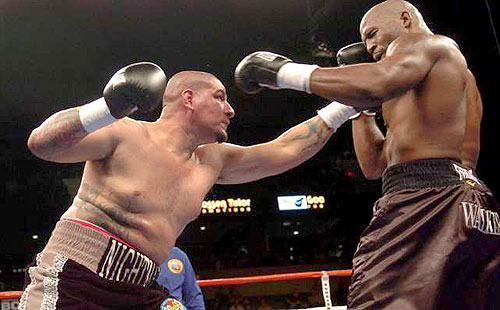
3. Boxing. Three things. First, Paul Williams, who dominated Winky Wright on Saturday, should never lose a fight. He is a 6 foot 2 inch boxer who fights anywhere from 147 - 160. He has an 82 inch wingspan and throws over 100 punches a round. He was - somehow - upset in one fight (in the re-match Williams avenged his loss with a devastating 1st round knockout). But that fluke aside, this guy should beat everyone at 147 and 154 and possibly even 160 (although Kelly Pavlik could be a tough matchup). Look for Williams and light-heavyweight Chad Dawson (with honorable mention to welterweight Andre Berto) to be the next great American boxing stars.

I purposely did not mention Chris Arreola. I am a Chris Arreola fan - he has an aggressive and fan-friendly style in the ring and star quality (complete with amazing interviews) outside of it. But before Arreola can convince me that he is ready to be the Mexican Tyson, he will have to show up for big fights in better shape. Additionally, Arreola takes a lot of hits. It is unclear how he would fare against a Klitschko were the fight to go into the late rounds and stamina became a factor.

Third, is there any sports show better than 24/7? The new series, of course, is about Hatton and Pacquioa's May 2nd fight. My view: I would short Pacman. I think Pacman's value is a bit inflated because of his domination of a frail Oscar De La Hoya. And because of exaggerated odds, Hatton might be the better bet. Look for odds to narrow closer to fight night.

In conclusion, I could out-box most economists.

Monday, March 30, 2009

College Basketball Ombudsman: Mid Majors Take 2

TWO's longtime friend, frequent debate loser and sometime muse, Gus Johnson's Whisper, wrote a blog entry countering TWO's previous entry arguing for more mid-majors in the NCAA tournament. GJW, for reasons known only to him, screamed like a school girl during a Jonas Brothers sighting when he learned of the inclusion of Arizona, Maryland and Wisconsin in the tournament field. Humorous similes aside, GJW is a fan of the Jonas Brothers. Just stating facts here.

I will attempt to summarize his argument so that you will not have to wade through the general incoherence and disorganization of his piece. It essentially breaks down into a few ideas:

- He breaks up mid-majors into two categories, mid majors from the A-10 and "Boppers" (bottom-toppers) which are good teams from terrible conferences.

- He shows that in this and in previous years, most of the final 4, final 8 and final 16 were teams from BCS conferences, not "Boppers".

- He shows that a high percentage of "Bopper" teams do not make any sort of tournament runs, and that Arizona, Maryland, Wisconsin and Michigan (this year's questionable at-large teams) each won at least one game.

- He propounds that, in some years, when the BCS conferences are down, midmajors deserve more bids, but this year was not one of those years.

Unfortunately for GJW, his argument, in addition to following no known logical progression, is also mostly unresponsive to mine.

First of all, trying to remove Xavier and Temple from the ranks of mid-major is a bit self-serving, but ultimately inconsequential for this discussion.

Second, the fact that the teams advancing in the tournament are mostly BCS schools should suprise no one. Generally the very best teams are from BCS conferences. They get the most bids. In a bad year for BCS schools, they get 24 of the 34 at-large bids, and in a good year (like this one) they get 30 out of the 34. It makes sense that there would be more BCS schools advancing deep into the tournament. At no point was TWO arguing that midmajors, or a high percentage of midmajors, will be regularly advancing to the Final 4.

The argument, rather, is about teams on the margins. Bubble BCS teams vs Bubble midmajor teams. When the selection committee had 4 remaining at-large selections (having given out 26 of the previous 30 to BCS schools), they had a choice between BCS teams like Arizona, Wisconsin and Maryland and midmajors like Creighton, St. Mary's and Davidson.

Why should they have picked the latter?

1) The NCAA selection committee has a responsibility to pick a field for the tournament that will both provide an opportunity for the top teams to play and be enjoyable for students, fans, and the viewing public.

2) The BCS teams have proven, beyond a doubt, that they are not top teams. There is plenty of information available to suggest that these schools will not get very far in the tournament. When you play 16 ACC games and lose 9 of them, as Maryland did, sure, you might have a good game and beat a 7th seed, but then you will do as you did all season long, and get handled by a top team (Memphis blew out Maryland in the next round).

3) The midmajors - or Boppers - are more mysterious, but are likely not top teams either. They have not played as much top competition. There is a strong likelihood that these schools will, like the BCS bubble teams, get handled early in the tournament. GJW correctly points out that only one or two midmajors, if any, make significant tournament runs each year.

4) Because of the lack of information on midmajors, however, once every couple of years there is a midmajor team drastically, drastically undervalued that actually is a top team. Davidson - which in 2006 lost to eventual national champion Kansas by 2 points in the Elite 8 - was a 10 seed. George Mason made it to the final 4 in 2006 as an 11 seed and, prior to their run, were famously told that they "didn't belong" in the tournament by Billy Packer.

5) Somewhat more sentimentally, the public LOVES Cinderella runs and upsets, no matter the sport. No one, not even graduates of the school, will remember that Arizona beat Utah and Cleveland State and then got beaten by 40 points by Louisville, but everyone remembers Cinderella runs of Davidson and George Mason. I don't think its unrelated that this is widely considered the most boring NCAA tournament in recent years.

6) Because choosing BCS bubble schools over midmajor bubble schools risks that a top team will not make the tournament (even if this is the case only once every two or three years), while the reverse choice does not run any comparable risk, coupled with the enjoyment fans get out of seeing smaller schools play against big schools leads me to once again aver that the NCAA Selection Committee should select more midmajor at-large teams.

If anyone is wondering what trip you just took with me over the last 6 paragraphs, its called a logical progression.

This weekend's upset prediction: Michigan State over UConn. Thabeet gets in foul trouble.

In conclusion, Dr. Octagon was GJW's pediatrician during his formative years.

Friday, March 27, 2009

Humor Ombudsman: Tiger Woods Impression

You know whats great? Being right about Villanova beating Duke.

Lets celebrate by watching a totally unrelated but really funny Tiger Woods impression on the radio.


In conclusion, TWO once won 50,000 dirhams off Bob Costas at a backgammon tournament in Rabat.

Monday, March 16, 2009

College Sports Ombudsman: Unprecedented State


Yesterday evening the NCAA basketball tournament brackets were announced. After it was over, TWO fully expected football BCS chairman John Swofford, wild-eyed and disoriented, to burst on to CBS's set and proclaim "this is an unprecedented state of health!!!" before being beaten into submission by Seth Davis and Greg Gumbel, the latter at times using his shoe, before security could remove Swofford from the studio.

While the NCAA tournament is in a far better state of health than the football's BCS circus, yesterdays selections indicate that the same large school/large conference bias is present in both. In short, the bias can be summed up as the following: nearly every school in a big conference is better than even the best schools in the midmajors.

TWO submits the following: evidence shows that over the past 4 or 5 years, mid-majors have consistently out-performed comparably ranked BCS bubble teams and mid-majors have out-performed their own seeds. Because of that, not only should more midmajors receive bids, but their seeds should be higher.

Much of the problem has to do with the self-fulfilling nature of the selections. When mid-major teams are selected, they are frequently (and sometimes correctly) seeded 16-12. These mid-majors are thus playing the top teams in the country, teams that have already proven they are better than their intra-conference BCS bubble teams. Meanwhile, BCS bubbleteams, if they receive bids, are typically given the 7-10 seeds, meaning that they have a much better chance of winning those early round games, as the competition is not as tough.

So lets compare like things and look at how mid-majors have done against BCS schools in the 10 vs 7 and 8 vs 9 games historically.... unsurprisingly to TWO, the record is even... 18-18. Further, since 2004 10 mid-majors seeded 7th or higher have reached the Sweet 16, while only 4 BCS schools have gone that far.

What does that tell you? Quite simply, midmajor bubbleteams are frequently undervalued. The root of the problem is the selection committee's handling of information. Each year they are asked: Do we pick A) a BCS team on which we have plenty of information and that has proven beyond a doubt that they are clearly not a top team, or do we pick B) a mid-major team that we don't know as much about, has a great record and could be a flop or could make an incredible and exciting Cinderella run that captures the imagination and hopes of a nation? Year after year, the selection committee picks choice A. And the fact that 10 mid-majors have made the sweet 16 after being seeded 7-10 (compared to only 4 BCS bubble teams) shows you that year after year, it is the mid majors who are undervalued and the BCS teams that are who we thought they were.

I won't go overboard with historical analyses - but a look at the final NCAA polls in recent seasons is helpful for establishing that every year several midmajors outperform their seeds... in 2008, Davidson (9th), Butler (14th), Western Kentucky (22nd) and Drake (23rd) finished in the top 25, meaning that, in retrospect, each deserved to be a high seed. Their actual seeds? 10th, 7th, 12th, and 5th, respectively. In 2007 there was Southern Illinois (final ranking 14, seeded 4), Nevada (15, 7), Butler (21, 5), Winthrop (22, 11) and BYU (24, 8). And 2006 saw George Mason (6, 11) George Washington (19, 8) Wichita State (21, 7), Bradley (24, 13) and Bucknell (25, 9). You have to wonder, first, what could these teams have done if they were seeded more accurately in the first place and second, what could the next best team in their conference have done if they had been given an at-large bid?

So armed with this body of information, this body of facts regarding midmajors' regular and consistent performances which tend to indicate that they should be given more and higher bids...now that we have this...lets look at what the selection committee has done in 2009.

We DON'T have St. Mary's, which went 26-6 (including 4 losses while their star player, since returned, was out), but we DO have 20-13 Maryland, which went 7-9 in conference including a loss to Duke by 127 points in January that was so brutal that Greivis Vasquez set his hair on fire at midcourt and coach Gary Williams wept, nude, on his office couch for two days afterwards.

We DON'T have Creighton, which went 26-7 and won its regular season conference, but we DO have Arizona, which went 19-13 and finished 6th in the Pac-10. I'm not sure if my favorite part of Arizona's resume' is their loss to UAB or that they've lost 5 of their last 6 games - but either way, I can't wait for their Cinderella run.

We DON'T have Davidson, which went 26-7 (including a win over current 6 seed West Virginia and close losses to Duke and Oklahoma - both 2 seeds) and won its regular season conference championship, but we DO get 19-12 Wisconsin, which managed to not win a single game against a ranked opponent but did have a player on the roster named Wquinton. The best part is that its pronounced "Quinton". The family loves the letter W but hates Wynton Marsalis. There was only one solution.

And we could go on - what about at-large bids for Vermont, VMI, College of Charleston, Arkansas-Little Rock, San Diego State and Niagara? I'm not saying that these teams ALL should have received bids, but the fact that they weren't even in the discussion shows that there is a problem.

When the selection committee finally stumbled out of its meeting room, the smoke cleared, the dust settled, the strippers went home, and the young Thai boys hid in the cupboard, of the 34 at large bids, thirty (30) went to BCS bubble teams. Somewhere, John Swofford was wondering why Xavier got a bid.

In conclusion, I last won an NCAA pool in 2000. Thank you Mateen Cleaves.

Monday, March 2, 2009

NBA Ombudsman: Loyalty and Style

Changing outfits.

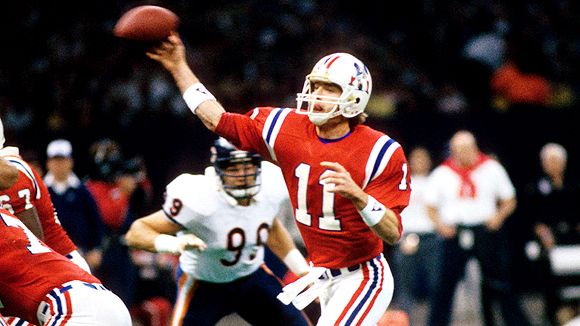
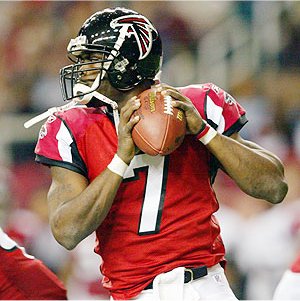
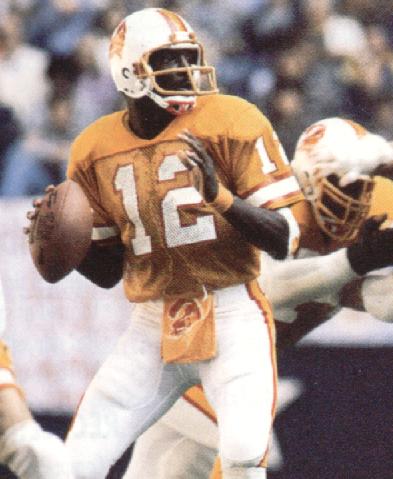
In a recent ESPN column, Len Pasquarelli correctly avers that fan loyalty in the NFL is eroded by rampant free agency. And while free agency is a problem in football, the NFL has taken steps to limit its effects and maintain continuity in other ways. The primary way the NFL does this is by keeping uniforms, colors and logos constant. NFL teams can only adjust their uniforms every 5 years, and typically uniform changes are minor. For example, among teams existing in the same city for each of the last 20 years, only the Patriots (before and after), Broncos (before and after), Falcons (before and after) and Buccaneers (before and after) instituted major changes to their uniforms and logos, and all except the Bucs maintained the same team colors. During that time period, 3 teams (ignoring the Cleveland-Baltimore situation) changed cities - the Raiders moved from Los Angeles to Oakland and kept their uniforms the same, the Rams moved from Los Angeles to St. Louis and maintained the same logo and essentially the same colors and the Houston Oilers becamse the Tennessee Titans, changing the logo but maintaing the same color scheme. Continuity of team colors and uniforms may seem minor, but I believe it explains a lot about fan loyalty in a time when players can move from team to team very quickly.

It is also interesting to juxtapose this against the fly-by-night circus act that has become the NBA. In addition to the much worse free agency problem the NBA has (just look at the number of top players that will likely change cities in the next 2 years), the teams change their outfits like an 19 year old sorority girl whose jeans don't fit before the PiKa - Delta Gamma Tailgate. Literally the only difference is that lip gloss is not as much of an issue to the NBA players...or is it?

In the last 20 years, the only teams to NOT have had major changes to their uniforms are the Knicks, Celtics, Bulls, Spurs, Clippers and Lakers. For the other teams, it has been a total free for all. The worst offenders?

The Cavs used to have perfectly normal uniforms in the late 80s and early 90s, with instantly recognizeable orange and blue colors. Then, in 1995, they suddenly started wearing this. One day, someone said - why not start wearing maroon and gold? So now they do! But also sometimes they'll wear blue. Whatever - no rules!

The Nuggets had my favorite logo and uniform design of any team in the NBA, and maybe in all of professional sports. But why stick with unique and well liked when you can have plain and uninspiring? Then, a few years later, a marketing person thought - Now lets confound everyone with a totally new logo and color scheme! In 2010, the Nuggets will be unveiling their new logo - a small, very small asian cat named Nugget. The colors will change daily, but the players will all be asked to have crazy hair.

The Rockets. Again, at one point the Rockets had a very recognizeable logo and colorscheme with red, white and yellow trim. In the mid 90s, the Rockets thought, why not just do blue? Notwithstanding the Pistons, Mavericks, Warriors, Timberwolves, Nuggets, Magic, Pacers, Knicks and Nets, there's just not enough teams with blue. Lets also throw in pinstripes. And boom....there it is... the first ever NBA uniform doubling as summertime pajamas. Drop the microphone and walk off the stage. But now come back on the stage, and throw out this logo, which could have easily originally been pushed as the logo for Raw, a now defunct MMA clothing line. Look, the new uniforms are an improvement, but how long will it last? How amazing would it be if the new mascot of the Rockets was Elton John and he designed different uniforms every night. He would play Rocketman before each game and then sit on the bench with the team, delivering water and towels to perspiring players while unnerving everyone in the process. Just an idea.

I could go on like this about the Hawks, Bucks, Warriors, Suns and a number of other teams as well. The bottom line is, when the players are all different, the colors change, and the logo keeps getting updated, what is it fans are rooting for? Their city? Themselves?

In conclusion, I was a dominant 8th grade basketball player.

Tuesday, February 17, 2009

CSPAN Ombudsman: Ranking Presidents, Roxette

Who's the best?

In response to overwhelming public demand, CSPAN got 65 historians to take time off from their schedules to let Americans know which Presidents have been the best. A helpful article accompanies this with the breaking news that Lincoln is the top rated President. See also http://www.cnn.com/2009/POLITICS/02/16/presidential.survey/index.html .

I realize that we have somehow developed into a ranking society, where every show on E! and VH1 is a countdown of some kind, but the idea that a) Americans need their Presidents ranked for them and b) these rankings are definitive in any way is absurd.

As an indication of how silly this is, please read an actual excerpt: "....Bill Clinton jumped six spots from No. 21 to 15. Other recent presidents moved positions as well: Ronald Reagan advanced from No. 11 to 10, George H.W. Bush from No. 20 to 18 and Jimmy Carter fell from No. 22 to 25." Now read that again in Casey Kasem's voice, and replace Bill Clinton with Richard Marx, Ronald Reagan with Boy Meets Girl, Bush with The Bangles and Carter with Roxette, and this could be a 1989 American Top 40 transcript. But why are these Presidents advancing and falling? Either they were good or they weren't, but their performances haven't changed. What has George Washington done to deserve being dropped in the rankings? The explanation that "Today's concerns shape our views of the past..." by one of the historians does more to discredit the rankings than explain them... to judge Thomas Jefferson's presidency in light of, for example, the 2009 financial crisis, is the height of anachronism and revisionist history.

Second, and I won't go overboard in analysis here...but a couple of the rankings were very surprising. John F. Kennedy ranking 7th, ahead of Jefferson, Eisenhower, Wilson and Reagan is absurd. Kennedy was (tragically) only able to serve 3 years, and during that time did not have a particularly stellar record (see, eg the Bay of Pigs Fiasco). It is hard to defend his 3 year performance as exceeding that of so many well regarded two term presidents. Second, Jimmy Carter ranking 25th, essentially middle of the pack, is even more egregious. Jimmy Carter steered the country towards a period of high unemployment, low growth and dangerously high inflation. He received epicly low approval ratings and was internationally embarrassed by the Iran Hostage Crisis. Carter managed to win only 6 states and the District of Columbia in his 1980 reelection bid. However, Carter was ranked ahead of people like Richard Nixon (who, while far from perfect, served two terms and was popular enough to win his reelection in one of the greatest landslides in American history), Zachary Taylor (who had an effective Presidency shortened by death) and James Garfield (who only served for four months and didn't have time to lead the nation into ruin, like Carter did).

More importantly, I would like to announce that CSPAN will be teaming with VH1 to create the following jointly produced shows, to air on both networks:

1) Top 10 Totally Unbelievable Invasions. Hosted by Daisey Fuentes, historians rank various sneak attack military operations, from the fall of Troy to Quantrill's Raiders to Normandy as Michael Ian Black ("I mean, to the Germans, Eisenhower is like the anti-David Hasselhoff!!! And so is Omar Bradley!"), among others, provide commentary. Into and out of commercial breaks, the chorus to EMF's Unbelievable plays as the show's title graphic appears. From the actual show transcript...Historian: "After Ghengis Khan's invasion of Volga Bulgaria, he set his sights on Hungary, after physically crushing Russian princes to death under his eating platform" Sinbad: "DAMN!"

2) Top 30 Most Influential Christians. With quick cuts and Swizz Beatz tracks playing in the background, CSPAN/VH1 counts down through St. Augustine, various Popes, St. Peter and others. Spoiler Alert! Jesus falls one spot to #2 as host Giuliana Rancic explains that, quite simply, Jesus' name recognition has been diluted by the sheer number of Mexican boxers of the same name ("Dios Mio!" quips celebrity commenter George Lopez). Some Christian leaders attending a pre-screening have questioned Apostle Paul's #1 ranking, contending that Jesus is the central figure in their religion, but CSPAN/VH1 stands by its rating process.

3) All Access: 20 Most Controversial Supreme Court Decisions. Brooke Burke is all about controversy as she counts down an explosive list of court cases with comments from a star-studded group of celebrities. The list is comprehensive, from Plessy v. Ferguson ("That $#!* was %@#*@# up" - Ice T) to Roe v. Wade ("YEAH!" - Linda Perry) to, of course, Church of Lukumi Babalu Aye v. City of Hialeah ("That ordinance was neutral but was improperly motivated and thus had to be narrowly tailored to meet a compelling governmental interest!" - Tracy Morgan).

In conclusion, Roxette is a severely underrated 80s band.

Tuesday, February 10, 2009

The City Ombudsman: Less Tamarama Interruptions, Please!


After referencing Tila Tequila and Lady Gaga recently, I thought it was time to get back to serious issues like The City.

Lets talk about loyalty and double standards. A few weeks ago Adam made late night kissing with some girl who was not his girlfriend Allie. What followed? Two episodes of tears and gnashing of teeth...Whitney and Erin and Allie were all about the angry talk and using terms like "liar" and "cheater" and "guy who wears clownishly enormous v-necks to Tenjune." The last one wasn't actually said but is no less true. And MTV, for their part, used clips and angles that made Adam look like a creep. It was frankly surprising that there wasn't grainy footage of him pulling up to a lower east side elementary school in a van and offering kids snow cones before peeling out when he realized the camera was on him. But fine, you shouldn't cheat and lie.

However, over the last two episodes, Erin has been cheating on her long distance boyfriend with one "JR." I'm not sure what MTV is trying to imply when they show JR waking up at Erin's apartment and struggling to put on his youth medium Affliction tee shirt, but if one reads between the lines, I think they're suggesting that Erin and JR are doing more than just kissing. And by that I mean having relations. But is there condemnation? Is Erin shown cackling maniacally as she necks with JR with a quick cut to her Canadian boyfriend crying as All Out of Love plays? No. Instead she is treated with incredulous giggles from her girlfriends who want to know how she feels and what she wants. MTV makes her out to be sort of a lovable party girl who has this difficult boy situation! And the episode ends with her talking to JR and crying.

So to recap, Adam cheats on Allie, Allie cries. Erin cheats on her boyfriend, Erin cries. What? How can this be! While Adam's and Erin's situations aren't identical, the bottom line is: both cheated! However, one person is being treated like he did something wrong by cheating, and the other person is being treated as if they have just found themselves in a difficult situation and the cheating is just an unfortunate by-product. Unfair.

Do you know whats also unfair? My having to sit through two performances by Jay's Bananarama cover band and not getting to hear Venus.

That segues nicely into my other musing, which concerns the Hotel Gansevoort rooftop. Seriously? Not sure why one of the events had to take place here. I challenge you to find a place in Manhattan that has a lower percentage of Manhattan residents among its patrons. 230 5th in the summer is probably the only serious contender, when during happy hour the area code on the rooftop actually changes from 212 to 516. Hotel Gansevoort, meanwhile, is typically filled with 24 year old suit jacketed, slick haired guys from Hoboken who live with four other roommates. In between buying rounds of Patron shots for unsuspecting FIT first years, these dudes pass the time by blackberrying each other feverishly (mostly about when the other roommates are showing up and whether its time for more Patron). The point is, again, less Meatpacking District please!

So what have we learned today? Sometimes there are apparently double standards for cheating, and B&T loves rooftops.

In conclusion, I'm burning like a silver flame.

Wednesday, February 4, 2009

Celebrity Ombudsman: Michael Phelps = Tila Tequila


FINA, an international swimming organization, just issued a press release praising a swimmer for taking illegal drugs....and apologizing. Lets discuss.

Sometimes celebrities emerge through their own hard work and accomplishments, and sometimes celebrities are created through confusing magic and sorcery that results in them continually being on TV but no one knows why.

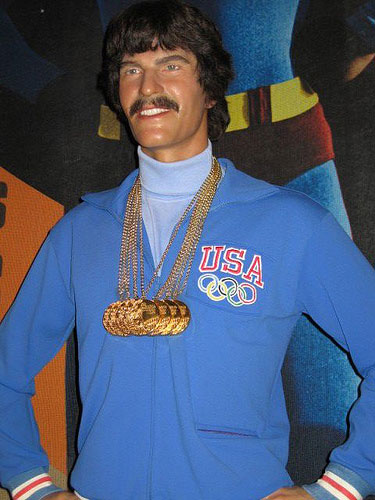
Michael Phelps is an interesting combination of the two. Phelps' performance in the Olympics obviously is an example of personal accomplishment being rewarded with fame. However, instead of Phelps staying "a swimming-celebrity", like a Mark Spitz sans sensual mustache, Phelps has turned into the second kind of celebrity. Why? Because sponsors and swimming organizations see that there is a lot of money to be earned off of him.

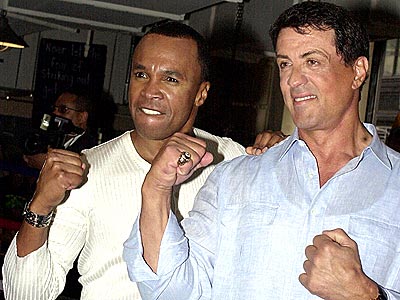
Ideally, Phelps would have become an icon naturally, due to a dynamic personality (like a Sugar Ray Leonard) or good looks (like an Anna Kournikova). But Phelps is sort of shy and didn't really catch on as a true celebrity. So the formula, to these Phelps-opportunists, is obvious...if it doesn't happen organically, force it. Force it like the 10,000th showing of the UnderArmor"I don't even know my power" commercial, force it like Carson Daly's blaccent interviewing Ludicrus ("Luduh, I mean, the the rhymes be flowin, the crowd be feeling it -"). Force it.

All of a sudden, well after the Olympics are over, we keep seeing Michael Phelps being paraded around in crooked hats. Just appearing places constantly: wandering around at various football games, dragged to fashion shows, forced onto Entourage. I'm pretty certain that I saw him get Next-ed by Amber, a spicy 19 year old from La Jolla ("You might have all them medals, but I ain't even trying to settle") but fare better with Tamra on a lascivious episode of Real Housewives of Orange County. And always in crooked hats.

So whats the point of this post? There should be a line between the behavior of sponsors and PR firms and that of governing bodies. After Michael Phelps smoked marijuana and apologized, FINA (a swimming organization certain to benefit if Michael Phelps can become like Michael Jordan) praised him for the apology as a means of damage control. Please note that there was never a separate condemnation press release - only this one that said it was inappropriate, but that he was great and that FINA hoped he would participate in their upcoming World Championships. FINA was more concerned about losing money with the fading of Phelps' star power than they were with making certain their athletes behave themselves.

After Pacman Jones made it rain all over a strip club in Las Vegas, prompting a riot and a shooting, did the NFL praise his apology and insist that the apology alone was a sufficient guarantee that he would "continue generating respect and admiration to fans"? [*Notice, by the way, that this is "to fans" and not "from fans." According to FINA, Phelps is a machine who just can not stop admiring and respecting the people who attend swimming events. Tirelessly respecting people.*] Anyway, no, the NFL suspended Jones for a year. The point is - the role of a body like FINA is to govern the sport and the behavior of its athletes, not to be a pseudo - PR firm protecting its big names. Shame on FINA and shame on Carson Daly.

In conclusion, I swim a very competitive breaststroke.

Monday, February 2, 2009

Political Ombudsman: Don't Boss Me

Sometimes, people try to tell you what to do.

In this article, a guy named Jonathon Porritt tells people that they shouldn't have more than two kids because any more would overly burden the environment. I have a few angles.

First, the act of telling people, unprovoked, what's best for them is something that should be more widely frowned upon. How much respect, overall, would you say society has for people like Dr. Phil, Ricki Lake and Montell Williams? Probably not much. But these people are giving advice to people asking for it. Porritt is just some guy, uninvited, shouting on the street at whoever will listen and calling families around dinner time. If this were the 19th century, he would be selling elixirs out of a wagon.

Second, Porritt, a man who undoubtedly wore a scarf throughout his interview, can't back up his assertion. Porritt claims that two children should be the maximum allowed because he knows how much carbon people use (a dubious, unchallenged averment). Even if we were to assume that was true - we are still missing steps... like what is the effect of that carbon increase on temperature, and what is the effect of that temperature change on the world? No one knows with any certainty. Doesn't matter to Porritt, who wants to figuratively (perhaps literally - although this would require further research) lie in bed with husbands and wives and have a say in their decision about having children.

Third, a broader point: Throughout history, certain people have used whatever "reasons" are available to them to control the masses. The typical left-right, liberal-conservative lense is not particularly helpful when viewing these attempts at garnering power and control.

Example: Liberal Lucy might read the above article and say "My, this seems a bit extreme but I constantly worry (cry?) about living my life the right way." However, she might view an evangelical politician saying that abortion will send you to hell and think "My choice!" or "Dismantle Patriarchy!" or "Just Dance!" or whatever it is that girls say now. Functionally - what is the difference between the two? Porritt favors forced abortion and the latter favors forced not-having-an-abortion. Either way, someone is dictating what you do with your body, which should leave a bad taste in your mouth. (TWO digression - speaking of bad taste, don't buy Tropicana Light & Healthy Orange Juice Beverage, it's disgusting).

Instead of viewing things as left vs right, the question should be - is this restriction something that seems like it would ordinarily only happen in Communist Russia or Nazi Germany? If intuitively the answer is yes, then the presumption (rebuttable only in situations where the emergency is so immediate and dire that a weighing of the costs and benefits clearly favors such a restriction) should be that the advocate is an idiot, albeit a dangerous one, interested in control above all else. Unless the presumption is rebutted, does it matter if the excuse given is the good of the proletariat, the protection of nationalist interests, getting into heaven or saving the planet?

To be clear, TWO is an environmentalist. I support being smart about the environment, cutting emissions and protecting wildlife. However when the British government begins seriously talking about limiting children and rationing travel, the topic is no longer environmentalism, its control of the masses.

In conclusion, I constantly worry (cry?) about living my life the right way........and celebrate Mandy Moore's entire catalog.

Wednesday, January 28, 2009

Cinema Ombudsman: Defiance = Ground Hog Day?

I recently viewed Defiance. It was good cinema.

The story was amazing, the movie was well done (if a bit long) and Daniel Craig was superb...all together it was somewhere between Casino Royale and Goldfinger. HAHAHA! Oh goodness. But moving on - it was a solid movie, but it is probably the 100th movie about the Holocaust in the last 10 years. For example, just this winter there is - in addition to Defiance - Valkyrie, The Reader, Adam Resurrected, Good and Boy In Striped Pajamas...all in major theaters, all about or directly relating to the Holocaust.

Page Six indicated that there may be a "demand" for this sort of movie reflected in Academy Awards. However, I'm not going to get into why so many of these movies are made - studios can pump out whatever movies they want....my question is - why is the public not more taken aback? Of all the things that have ever happened in the history of the world, why are we picking among 6 movies all related to the same event? Can you imagine if there were six movies coming out at one time all related to Stalin's Russia and the gulags? No one would know what was going on. Stunned movie-goers would be asking "Wait - Is this based on a true story?" "Kevin Connolly was SUPER as Trotsky!" and "What was Rosie Perez doing?"

On a serious note, do yourself a favor and read an excellent book - Koba The Dread by Martin Amis about that period in Russian history. I guarantee that you'll be shocked and, less importantly, it will further underscore the impetus for this post.

Moving on again, after I thought -- why so many Holocaust movies?...I thought to myself - what hasn't there been a movie about? Below are five intriguing true events you've never heard of - of all different types - and about which there should definitely be a movie. Note to Readers: If, upon reading the below list, you happen to think to yourself "My, The World's Ombudsman is truly a brilliant and fascinating fellow," please know that, while true, any inference drawn was from your own reading and was not implied in any way by TWO. I can also do 50 push ups without stopping.

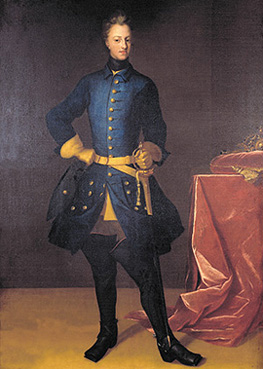
1) The Great Northern War. It lasted 21 years, involved a lot of interesting personalities and was almost single-handedly started by a man who had been forced from his country and, in revenge, allied its enemies together to attack it. Steve Buscemi stars as Peter the Great, Phillip Seymour Hoffman as Johann Patkul and Nicole Kidman as Charles XII.

2) North Sentinel Island. Did you know there is an island full of people who have NEVER been touched by civilization? Aside from some brief 1970s attempts to contact them ending with someone getting shot with an arrow and their stabbing to death of some Indian fisherman who accidentally drifted onto their shores in 2007, there have been virtually no sightings of them, let alone contact. Sigourney Weaver is a rogue anthropolgist and is accompanied to the island by her reluctant and wise cracking assistant, Chris Tucker. There is an uncomfortable love scene.

3) Read this! One time this happened. A beautiful, mysterious woman checked into a hotel, danced her heart out, and then died in the arms of her last dance partner. Who was she? Where did she come from? What was she doing? No one knows. Beyonce Knowles and Channing Tatum heat up the screen.

4) Gangster Disciples. Everyone's heard of the Bloods and the Crips, but have you heard of GD? Started by a guy named Larry Hoover and another guy named David Barksdale, what began as a normal street gang now has over 60,000 members and its own political and military branches. Sidney Potier and Harry Belafonte are perhaps miscast as David Barksdale and Larry Hoover. Perhaps racistly miscast.

5) Anne Bonny, Mary Read and Calico Jack. Anne Bonny was a girl from Charleston, South Carolina in the 18th Century who fell in love with and married a pirate. She then had an affair with another pirate, named John "Calico Jack" Rackham. To get onto his boat, she posed as a man, her true identity known only by Calico. Later, he accused her of cheating on him with another pirate named Read with whom Anne had become close. It turned out this Read was actually ANOTHER woman who had disguised herself as a man. What sultry mischief and dangerous hi-jinx! Brianna Banks, Rachel Starr and Mr. Marcus as Anne Bonny, Mary Read and Calico Jack, respectively. This is a different type of movie.

Little humors aside, my point here is - so many interesting and intriguing things have happened. There are so many incredible and important stories to tell. While it is proposterous that Hollywood would come up with six movies at the same time related to the same topic, it is perhaps more alarming that this barely raised an eyebrow amongst audiences and reviewers.

In conclusion, I was an extra in Step Up 2: The Streets.