


I have varied interests.
TWO spent a lot of time thinking this weekend. Here are some musings:
1) The Masters. Is there any other sport where the fans dress exactly like the athletes? Golfers all have their own style, from the understated, to the full-vest/visor accoutrement ensemble, to the late great Payne Stewart, who did his own thing. Here Payne appears to be playing golf for the Chicago Bears. I miss Payne Stewart.
But back to the issue. So I will accept the actual golfers wearing whatever they feel they need to to compete. But why is it necessary for fans (ignore numbering) to dress the same way? Yeah, honey - I've got tickets to the Masters...have you seen my golf pants, three button shirt, functionless golf vest and PING sun visor - I should probably bring my glove too, just in case.
Its as if each fan is hoping that, against all odds, Phil Mickelson might turn to them in the gallery and say - "Hey... you...yeah....you look like you know golf. Why don't you come out here and talk to me about this next hole. Hell - do you want to hit for me?"
"Why YES! Its a good thing I wore all my golf gear!"
Can you imagine this in any other sport? Do you see fans at a basketball game wearing high tops, ankles taped, headbands on, mouth guards in? Are women in the stands at Wimbledon wearing wristbands and tennis skirts - like a tennis match could break out at any point on their way to the ladies room and concession stand?
2. Economics. Two things interested TWO this weekend: price stickiness and stock market projections.
First, free market proponents (of which TWO is one) hail the ability of prices to fluctuate relatively quickly to reflect market conditions. However there are some areas where this does not happen. One area - a particularly troubling one - is commercial real estate. In New York City for example, where unemployment is skyrocketing, incomes and spending are falling, and businesses are failing, one would expect that rents charged to commercial tenants would decrease across the board. They have not. Many landlords have increased their rents up to 6%. As a result, businesses are closing their doors all over the city. Why?
The answer is that commercial rents typically lag well behind residential rents. Most of the commercial landlords have earned so much money from rents over the life of their holdings, that they can afford to receive no rent for extended periods of time. Banking on the fact that the economy will recover eventually, these landlords would rather get nothing for a year or so than lower rents and lock themselves into a 10 year lease at a rate that will be, in a few years, viewed as beneath market value.
While the landlords' behavior could be viewed as rational on a certain time horizon, it undeniably acts to sink us deeper into recession. TWO knows of a number of entrepreneurs interested in starting new businesses that have not been able to because of unreasonably high rents. The aggregated effects of this are immense when one considers that more than half (51% in 2004) of all employed people work for small businesses (defined as companies with less than 500 employees).
Second, many of you may have heard about investment houses issuing internal projections of 10% or more gains in equities by the end of 2009. Many think that this signals the beginning of the end of the economic downturn. They should think again.
Increases in equities can not be viewed outside of the context of money supply and spending levels. The deficit is already nearly $1 trillion, only half way through 2009. This is two times the highest-ever annual deficit. Barring increases in actual production, all of this spending - mostly funded by simply printing more money - will manifest itself in inflation. Inflationary periods are typically times when the bond market suffers (creditors are hurt and debtors are helped) and equity markets can do well, in nominal terms. However, in real terms, there is no reason to think that equity gains - if any - will signify any actual improvement in our economy - and in fact there is some reason to think that it might signify a dangerously inflation.
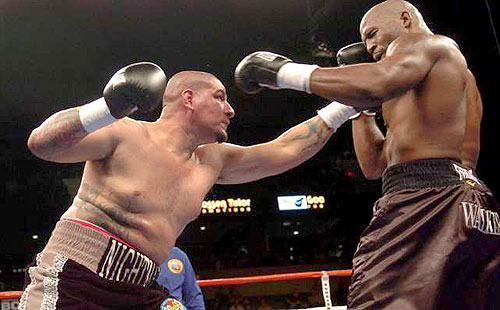
3. Boxing. Three things. First, Paul Williams, who dominated Winky Wright on Saturday, should never lose a fight. He is a 6 foot 2 inch boxer who fights anywhere from 147 - 160. He has an 82 inch wingspan and throws over 100 punches a round. He was - somehow - upset in one fight (in the re-match Williams avenged his loss with a devastating 1st round knockout). But that fluke aside, this guy should beat everyone at 147 and 154 and possibly even 160 (although Kelly Pavlik could be a tough matchup). Look for Williams and light-heavyweight Chad Dawson (with honorable mention to welterweight Andre Berto) to be the next great American boxing stars.
I purposely did not mention Chris Arreola. I am a Chris Arreola fan - he has an aggressive and fan-friendly style in the ring and star quality (complete with amazing interviews) outside of it. But before Arreola can convince me that he is ready to be the Mexican Tyson, he will have to show up for big fights in better shape. Additionally, Arreola takes a lot of hits. It is unclear how he would fare against a Klitschko were the fight to go into the late rounds and stamina became a factor.
Third, is there any sports show better than 24/7? The new series, of course, is about Hatton and Pacquioa's May 2nd fight. My view: I would short Pacman. I think Pacman's value is a bit inflated because of his domination of a frail Oscar De La Hoya. And because of exaggerated odds, Hatton might be the better bet. Look for odds to narrow closer to fight night.
In conclusion, I could out-box most economists.
Showing posts with label World's Ombudsman. Show all posts
Showing posts with label World's Ombudsman. Show all posts
Monday, April 13, 2009



Thursday, April 2, 2009
Cinema Ombudsman: Paul Blart Observes & Reports
All the good ideas have been used up.
Thats the only explanation as to why Observe & Report, a comedy about an overweight mall security guard facing a threat to his mall, would be coming out next Friday, approximately three months after the opening of Paul Blart: Mall Cop, a comedy about an overweight mall security guard facing a threat to his mall.
Both films contain silly clips of fat people running and some obligatory ethnic humor (they don't speak like us - HA!).
Here is, then, the second installment (first installment here) of our wildly popular series of little known but incredible factual events that should definitely have movies made about them.
1) Elijah Lovejoy. Reverend Elijah Lovejoy was an ostracized but unwavering abolitionist who preached and wrote anti-slavery articles in Alton, Illinois. He was widely despised for his views, and in November, 1837, Reverend Lovejoy was finally killed by an angry mob who attacked him in his printing warehouse and threw his printing press in the Mississippi River. He is considered a martyr and symbolicly the "first casualty of the Civil War." Reverend Elijah Lovejoy is played brilliantly by Reverend Timothy Lovejoy in this animated film for the whole family.
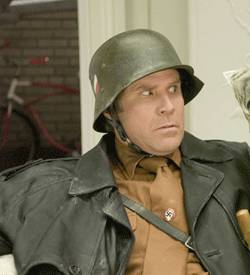
2) The Forgotten War. In 1942 the Japanese invaded the Alleutian Islands, a small but strategically crucial island chain near Alaska. The U.S. took nearly a year to drive the Japanese out, in mountainous, snowy battles that were bloody and frequently hand-to-hand. A last gasp Japanese counterattack saw one of the largest bonzai charges of the entire war. Thousands were killed. Will Ferrell is miscast as Sergeant Sidney Sweet with Jackie Chan as a tightly wound Colonel Yamasaki in this action thriller.
3) Oh - how about maniac anarchist meth-head rednecks living in bizarre compounds in the northern California forest? Its true. Its happening right now. Here's a picture TWO's friend took last week of signs just inside one of the fenced in compounds while traveling near Oroville, California.

This horror flick stars Billy Bob Thornton and Parker Posey as strung out, flesh eating zombie sect leaders and Seth Rogen as Ranger Tom, whose first day as a park ranger after years as a mall cop is more than he bargained for. Tom must save terrified camper Sissy Bergans (Paris Hilton) who is chased through the woods by the sect's winged-monkeys, played by the Olsen twins. Spoiler alert! The sect devours Sissy and Ranger Tom.
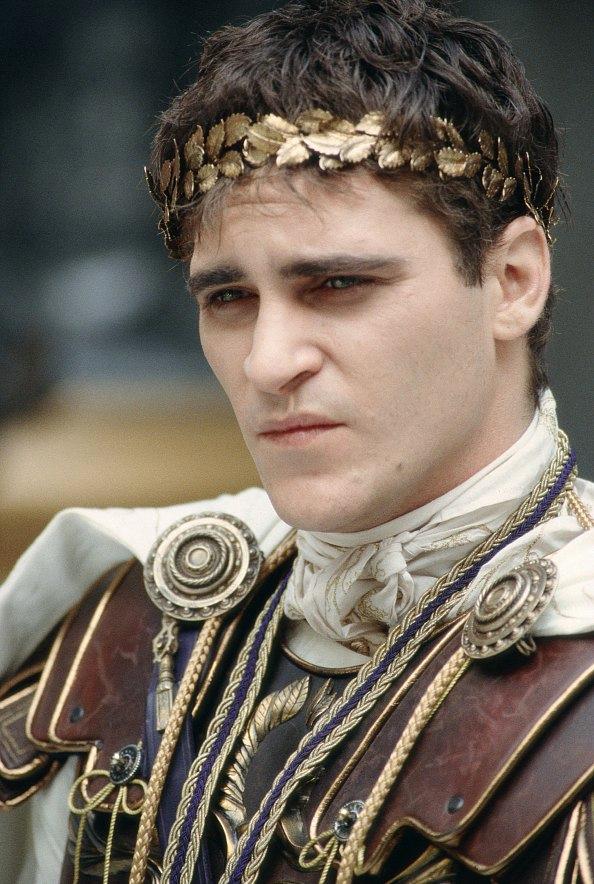
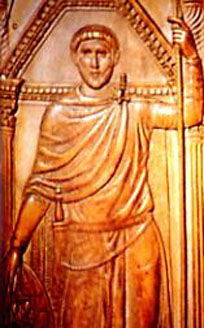
4) Alaric, conflicted warrior. Alaric was a Visigoth leader in the early 5th century and launched an aggressive campaign against Rome, who he felt had betrayed him. Over the next 10 years, he travelled all over Europe, was spoken to by a voice from the sky, had his wife captured, and launched several sieges. On the one hand, some of his methods were brutal. On the other, when he finally took Rome, the first to do so in nearly a thousand years, he and his army apparently made unheard of attempts to spare lives and preserve many of the buildings and sacred places in the city. In the performances of his life, Joaquin Phoenix is Alaric and Joaquin Phoenix is Flavius Stilicho. Brilliant!
5) Is this the most unbelievable true story of the past 5 years? A young husband shoots himself, committing suicide. His heart is donated to an old man, far away, giving the old man a second chance at life. The young widow begins receiving letters from the old man with her ex-husband's heart, thanking her for extending his life. They finally decide to meet, fall instantly in love and marry. 12 years later the old man kills himself as well. Jennifer Aniston, Adam Sandler and Larry David shine in this uproarious comedy.
In conclusion, TWO is full of interesting facts.
Thats the only explanation as to why Observe & Report, a comedy about an overweight mall security guard facing a threat to his mall, would be coming out next Friday, approximately three months after the opening of Paul Blart: Mall Cop, a comedy about an overweight mall security guard facing a threat to his mall.
Both films contain silly clips of fat people running and some obligatory ethnic humor (they don't speak like us - HA!).
Here is, then, the second installment (first installment here) of our wildly popular series of little known but incredible factual events that should definitely have movies made about them.
1) Elijah Lovejoy. Reverend Elijah Lovejoy was an ostracized but unwavering abolitionist who preached and wrote anti-slavery articles in Alton, Illinois. He was widely despised for his views, and in November, 1837, Reverend Lovejoy was finally killed by an angry mob who attacked him in his printing warehouse and threw his printing press in the Mississippi River. He is considered a martyr and symbolicly the "first casualty of the Civil War." Reverend Elijah Lovejoy is played brilliantly by Reverend Timothy Lovejoy in this animated film for the whole family.


2) The Forgotten War. In 1942 the Japanese invaded the Alleutian Islands, a small but strategically crucial island chain near Alaska. The U.S. took nearly a year to drive the Japanese out, in mountainous, snowy battles that were bloody and frequently hand-to-hand. A last gasp Japanese counterattack saw one of the largest bonzai charges of the entire war. Thousands were killed. Will Ferrell is miscast as Sergeant Sidney Sweet with Jackie Chan as a tightly wound Colonel Yamasaki in this action thriller.



3) Oh - how about maniac anarchist meth-head rednecks living in bizarre compounds in the northern California forest? Its true. Its happening right now. Here's a picture TWO's friend took last week of signs just inside one of the fenced in compounds while traveling near Oroville, California.

This horror flick stars Billy Bob Thornton and Parker Posey as strung out, flesh eating zombie sect leaders and Seth Rogen as Ranger Tom, whose first day as a park ranger after years as a mall cop is more than he bargained for. Tom must save terrified camper Sissy Bergans (Paris Hilton) who is chased through the woods by the sect's winged-monkeys, played by the Olsen twins. Spoiler alert! The sect devours Sissy and Ranger Tom.


4) Alaric, conflicted warrior. Alaric was a Visigoth leader in the early 5th century and launched an aggressive campaign against Rome, who he felt had betrayed him. Over the next 10 years, he travelled all over Europe, was spoken to by a voice from the sky, had his wife captured, and launched several sieges. On the one hand, some of his methods were brutal. On the other, when he finally took Rome, the first to do so in nearly a thousand years, he and his army apparently made unheard of attempts to spare lives and preserve many of the buildings and sacred places in the city. In the performances of his life, Joaquin Phoenix is Alaric and Joaquin Phoenix is Flavius Stilicho. Brilliant!


5) Is this the most unbelievable true story of the past 5 years? A young husband shoots himself, committing suicide. His heart is donated to an old man, far away, giving the old man a second chance at life. The young widow begins receiving letters from the old man with her ex-husband's heart, thanking her for extending his life. They finally decide to meet, fall instantly in love and marry. 12 years later the old man kills himself as well. Jennifer Aniston, Adam Sandler and Larry David shine in this uproarious comedy.



In conclusion, TWO is full of interesting facts.
Monday, March 30, 2009
College Basketball Ombudsman: Mid Majors Take 2
TWO's longtime friend, frequent debate loser and sometime muse, Gus Johnson's Whisper, wrote a blog entry countering TWO's previous entry arguing for more mid-majors in the NCAA tournament. GJW, for reasons known only to him, screamed like a school girl during a Jonas Brothers sighting when he learned of the inclusion of Arizona, Maryland and Wisconsin in the tournament field. Humorous similes aside, GJW is a fan of the Jonas Brothers. Just stating facts here.
I will attempt to summarize his argument so that you will not have to wade through the general incoherence and disorganization of his piece. It essentially breaks down into a few ideas:
- He breaks up mid-majors into two categories, mid majors from the A-10 and "Boppers" (bottom-toppers) which are good teams from terrible conferences.
- He shows that in this and in previous years, most of the final 4, final 8 and final 16 were teams from BCS conferences, not "Boppers".
- He shows that a high percentage of "Bopper" teams do not make any sort of tournament runs, and that Arizona, Maryland, Wisconsin and Michigan (this year's questionable at-large teams) each won at least one game.
- He propounds that, in some years, when the BCS conferences are down, midmajors deserve more bids, but this year was not one of those years.
Unfortunately for GJW, his argument, in addition to following no known logical progression, is also mostly unresponsive to mine.
First of all, trying to remove Xavier and Temple from the ranks of mid-major is a bit self-serving, but ultimately inconsequential for this discussion.
Second, the fact that the teams advancing in the tournament are mostly BCS schools should suprise no one. Generally the very best teams are from BCS conferences. They get the most bids. In a bad year for BCS schools, they get 24 of the 34 at-large bids, and in a good year (like this one) they get 30 out of the 34. It makes sense that there would be more BCS schools advancing deep into the tournament. At no point was TWO arguing that midmajors, or a high percentage of midmajors, will be regularly advancing to the Final 4.
The argument, rather, is about teams on the margins. Bubble BCS teams vs Bubble midmajor teams. When the selection committee had 4 remaining at-large selections (having given out 26 of the previous 30 to BCS schools), they had a choice between BCS teams like Arizona, Wisconsin and Maryland and midmajors like Creighton, St. Mary's and Davidson.
Why should they have picked the latter?
1) The NCAA selection committee has a responsibility to pick a field for the tournament that will both provide an opportunity for the top teams to play and be enjoyable for students, fans, and the viewing public.
2) The BCS teams have proven, beyond a doubt, that they are not top teams. There is plenty of information available to suggest that these schools will not get very far in the tournament. When you play 16 ACC games and lose 9 of them, as Maryland did, sure, you might have a good game and beat a 7th seed, but then you will do as you did all season long, and get handled by a top team (Memphis blew out Maryland in the next round).
3) The midmajors - or Boppers - are more mysterious, but are likely not top teams either. They have not played as much top competition. There is a strong likelihood that these schools will, like the BCS bubble teams, get handled early in the tournament. GJW correctly points out that only one or two midmajors, if any, make significant tournament runs each year.
4) Because of the lack of information on midmajors, however, once every couple of years there is a midmajor team drastically, drastically undervalued that actually is a top team. Davidson - which in 2006 lost to eventual national champion Kansas by 2 points in the Elite 8 - was a 10 seed. George Mason made it to the final 4 in 2006 as an 11 seed and, prior to their run, were famously told that they "didn't belong" in the tournament by Billy Packer.
5) Somewhat more sentimentally, the public LOVES Cinderella runs and upsets, no matter the sport. No one, not even graduates of the school, will remember that Arizona beat Utah and Cleveland State and then got beaten by 40 points by Louisville, but everyone remembers Cinderella runs of Davidson and George Mason. I don't think its unrelated that this is widely considered the most boring NCAA tournament in recent years.
6) Because choosing BCS bubble schools over midmajor bubble schools risks that a top team will not make the tournament (even if this is the case only once every two or three years), while the reverse choice does not run any comparable risk, coupled with the enjoyment fans get out of seeing smaller schools play against big schools leads me to once again aver that the NCAA Selection Committee should select more midmajor at-large teams.
If anyone is wondering what trip you just took with me over the last 6 paragraphs, its called a logical progression.
This weekend's upset prediction: Michigan State over UConn. Thabeet gets in foul trouble.
In conclusion, Dr. Octagon was GJW's pediatrician during his formative years.
I will attempt to summarize his argument so that you will not have to wade through the general incoherence and disorganization of his piece. It essentially breaks down into a few ideas:
- He breaks up mid-majors into two categories, mid majors from the A-10 and "Boppers" (bottom-toppers) which are good teams from terrible conferences.
- He shows that in this and in previous years, most of the final 4, final 8 and final 16 were teams from BCS conferences, not "Boppers".
- He shows that a high percentage of "Bopper" teams do not make any sort of tournament runs, and that Arizona, Maryland, Wisconsin and Michigan (this year's questionable at-large teams) each won at least one game.
- He propounds that, in some years, when the BCS conferences are down, midmajors deserve more bids, but this year was not one of those years.
Unfortunately for GJW, his argument, in addition to following no known logical progression, is also mostly unresponsive to mine.
First of all, trying to remove Xavier and Temple from the ranks of mid-major is a bit self-serving, but ultimately inconsequential for this discussion.
Second, the fact that the teams advancing in the tournament are mostly BCS schools should suprise no one. Generally the very best teams are from BCS conferences. They get the most bids. In a bad year for BCS schools, they get 24 of the 34 at-large bids, and in a good year (like this one) they get 30 out of the 34. It makes sense that there would be more BCS schools advancing deep into the tournament. At no point was TWO arguing that midmajors, or a high percentage of midmajors, will be regularly advancing to the Final 4.
The argument, rather, is about teams on the margins. Bubble BCS teams vs Bubble midmajor teams. When the selection committee had 4 remaining at-large selections (having given out 26 of the previous 30 to BCS schools), they had a choice between BCS teams like Arizona, Wisconsin and Maryland and midmajors like Creighton, St. Mary's and Davidson.
Why should they have picked the latter?
1) The NCAA selection committee has a responsibility to pick a field for the tournament that will both provide an opportunity for the top teams to play and be enjoyable for students, fans, and the viewing public.
2) The BCS teams have proven, beyond a doubt, that they are not top teams. There is plenty of information available to suggest that these schools will not get very far in the tournament. When you play 16 ACC games and lose 9 of them, as Maryland did, sure, you might have a good game and beat a 7th seed, but then you will do as you did all season long, and get handled by a top team (Memphis blew out Maryland in the next round).
3) The midmajors - or Boppers - are more mysterious, but are likely not top teams either. They have not played as much top competition. There is a strong likelihood that these schools will, like the BCS bubble teams, get handled early in the tournament. GJW correctly points out that only one or two midmajors, if any, make significant tournament runs each year.
4) Because of the lack of information on midmajors, however, once every couple of years there is a midmajor team drastically, drastically undervalued that actually is a top team. Davidson - which in 2006 lost to eventual national champion Kansas by 2 points in the Elite 8 - was a 10 seed. George Mason made it to the final 4 in 2006 as an 11 seed and, prior to their run, were famously told that they "didn't belong" in the tournament by Billy Packer.
5) Somewhat more sentimentally, the public LOVES Cinderella runs and upsets, no matter the sport. No one, not even graduates of the school, will remember that Arizona beat Utah and Cleveland State and then got beaten by 40 points by Louisville, but everyone remembers Cinderella runs of Davidson and George Mason. I don't think its unrelated that this is widely considered the most boring NCAA tournament in recent years.
6) Because choosing BCS bubble schools over midmajor bubble schools risks that a top team will not make the tournament (even if this is the case only once every two or three years), while the reverse choice does not run any comparable risk, coupled with the enjoyment fans get out of seeing smaller schools play against big schools leads me to once again aver that the NCAA Selection Committee should select more midmajor at-large teams.
If anyone is wondering what trip you just took with me over the last 6 paragraphs, its called a logical progression.
This weekend's upset prediction: Michigan State over UConn. Thabeet gets in foul trouble.
In conclusion, Dr. Octagon was GJW's pediatrician during his formative years.
Friday, March 27, 2009
Humor Ombudsman: Tiger Woods Impression
You know whats great? Being right about Villanova beating Duke.
Lets celebrate by watching a totally unrelated but really funny Tiger Woods impression on the radio.
In conclusion, TWO once won 50,000 dirhams off Bob Costas at a backgammon tournament in Rabat.
Lets celebrate by watching a totally unrelated but really funny Tiger Woods impression on the radio.
In conclusion, TWO once won 50,000 dirhams off Bob Costas at a backgammon tournament in Rabat.
Tuesday, March 24, 2009
NCAA Tournament Ombudsman: Sponsored by Buffalo Wild Wings

After a weekend of total mayhem and madness, TWO has collected himself and is prepared to share the following reflections on the NCAA tourney's opening rounds.
1) Arizona. Some of you may have interpreted last week's "I can't wait for their Cinderella run" statement as sarcasm, implying that Arizona didn't belong in the tournament and wouldn't make a run. It wasn't sarcasm...incredibly accurate prediction. Humors aside, I will admit that Arizona, stunningly, has a case that they should have made it in the tourney after all. While beating Utah and Cleveland State wasn't the toughest route, the sweet 16 is the sweet 16. And as a man of integrity, I will say that I was wrong about Arizona. However, I absolutely stand by my argument as a whole - and also happily note that Maryland, Wisconsin and Michigan failed to make any sort of run in the tourney. That, combined with my picking 14 of the Sweet 16, makes me both a man of integrity and a man who is almost always correct. It feels good. It feels really good.
2) Syracuse. I am rooting for Syracuse purely to extend the enjoyment of watching Syracuse girls, classes 2001-2008, go berserk all over Murray Hill. It is difficult to reconcile this with my rooting against Eric Devendorf, his unacceptable oncourt posturing and his equally unacceptable offcourt blaccent. If I wrote a movie about Syracuse basketball, Devendorf would be played by Justin Timberlake and Johnny Flynn would be played by Fife Dawg from A Tribe Called Quest. And Fife Dawg would constantly beat up Justin Timberlake.


3) The Buffalo Wild Wings Commercial. Absurd. Unfortunately I can't find the basketball version of the commercial on the internet, but here is a football version from the fall, with essentially the same theme. The basketball version will be shown 1000 times each game for the rest of the NCAA tourney, so you can't miss it. The premise is that a bunch of fans - from New York and Boston - are watching a game together at a bar. They decide they are having so much fun that they ask the bartender to put the game into overtime. He sends a signal to a photographer on court who, by using an ultra powerful camera flash, prevents a Boston slam dunk that would have won the game. The fans are absolutely delighted!
What are the problems? First, Boston and New York fans would never harmoniously be at the same bar, and second, there are at least 5 black people wearing Boston jerseys. This is 5 more black fans than actually root for Boston (or, as it is also known, the "Nation's Capital of Sneaky Racism"). Even Boston's black players don't root for Boston. For example, Rajon Rondo and Kevin Garnett play to win for the Celtics when they're on the court, but as soon as they're back on the bench they heckle their teammates and revert to their default mode of hating the Celtics, Patriots, Red Sox, Bruins and Revolution. Even the Revolution? Especially the Revolution. Third, the fans - for both sides - cheer wildly when the game is sent into overtime. Boston fans celebrating - thanking their lucky stars - that a Bill Buckner moment happened. Well, yeah, there may be years of agony later....but at least for now we get to enjoy an extra 45 minutes of Crispy Southwest Dippers and Huckleberry Lemonade!


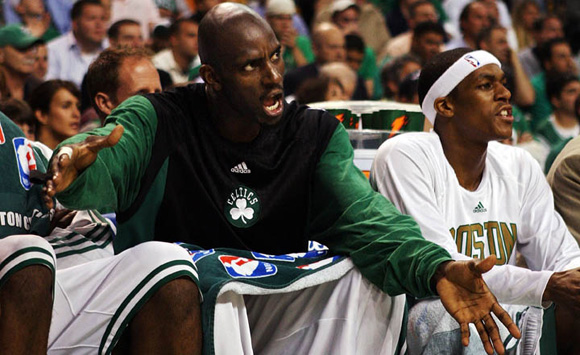
And I think thats the reason why this seemingly innocuous ad has had such a strong reaction. Real fans, while their favorite teams are playing, are stressed out, sweating, gut-wrenched and at times possibly miserable. I worked with an English woman who was actually incapable of watching England's soccer team play. She was so nervous that she had to sit outside and have people tell her what was happening. Real fans don't like and have nothing in common with the happy-go-lucky, wide-eyed Buffalo Wild Wings people, who are just thrilled to be at a chain restaurant socializing and high-fiving each other no matter who wins or loses.
4) The Announcing. Fantastic. Gus Johnson and Bill Raftery do a great job calling their respective games and capturing the excitement and emotion of the tournament (see also Gus Johnson's Whisper). One of TWO's least favorite things is the understated play-by-play man. In the 1980s and early 90s, this role was filled by Pat Summerall - here's Summerall calling the final play of the 1987 NFC Championship Game. While I liked Summerall generally, he just struggled at capturing the emotion of a big play.
The current understated play-by-play man is Joe Buck, who is even worse because he's boring and smug at the same time, as if he's bigger than the moment and too cool to be excited. Here is Joe Buck calling arguably the greatest play in Super Bowl history. Transcribed: "Pressure from Thomas off the edge...Eli Manning stays on his feet...airs it out down the field...it is caught by Tyree."
Lets compare that to Gus Johnson calling the end of a college basketball game from a couple years back. Transcribed: "Throws it down court!!! Batista wiTH THE CAAAAAAATCHSDXL&HGR2&HHHGGHX!!!!!!!! AND THAAAAATS ITTTTTTTT!!!!!!!!! WHAAAAT A COMEBAAAACK!!!!!!!!!!!!!!!!"
Can you imagine if Gus had called that Super Bowl play? He would have literally been screaming in tongues, bitten the ear off of the color guy and ransacked the booth. The transcript would have been entirely in wingdings.
5) Prediction. Villanova over Duke. Because I'd love it.
In conclusion, Huckleberry Lemonade sounds delicious.
Wednesday, March 18, 2009
Manhattan Ombudsman: Aspiring Europeans

Many of you may have come across this New York Times article about the Bagatelle and Merkato 55 brunches.
While there are many troubling aspects to this article, TWO will not, at present, solve the economic crisis subplot bubbling beneath the surface of this story. I will instead solve another problem that has been plaguing a certain subsection of New Yorkers, highlighted by the quote below:
"In addition, Mr. Laba said, the typical Bagatelle customer has a cultural affinity with this sort of rosé-soaked afternoon reveling. For the most part, the customers are what he described as “European friendly,” meaning they either are European or aspire to be."
There are two important groups here which TWO feels must be addressed: The Europeans who want to be Europeans and the Americans who want to be Europeans.
1) "Europeans". While TWO is friends with a number of Europeans, they are not "Europeans." Europeans in New York are normal people who come from a different country and are trying to broaden their horizons by building a life for themselves in a new city. They make American friends and appreciate (or in some instances tolerate) the differences they find in American culture. Europeans, by contrast, come to New York to specialize in being European. Its difficult to really stand out being European in Europe, so why not come to New York where you can really shine!
Are you a European living in New York, but want to be a European living in New York? The steps are simple:
a) Show up at Cafe Gitane in skinny jeans at 10:30 AM, drink coffee and glare at people as they walk by.
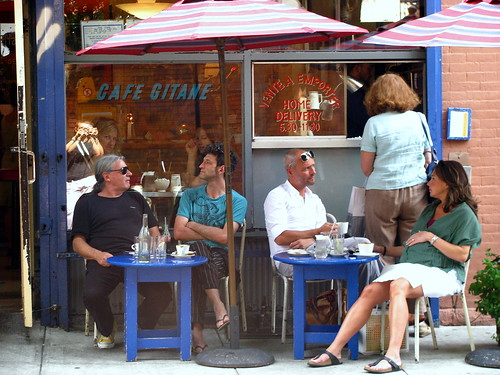
b) Later, go to brunch at Le Bilboquet, Bagatelle or Merkato 55 and when you meet American girls, always kiss them on both cheeks. Should they hesitate, hold out their hand, or kiss you on just one cheek, act befuddled and explain "Two kiss," even if that's not really your cultural habit.


c) No matter how familiar you've become with American names, do not pronounce any American name correctly. And never use the "j" sound, even if you're British, where the "j" sound is a staple of your phonetic alphabet.
d) Always introduce yourself and your friends to people by your full name in the strongest accent possible: "Bonjour Yulia. Oui, I am called Jean-Pierre Emile, and this is Danilo Lukanelli, and this his friend from Marbella called Sebastian Del Pueblo de Nuestra Señora la Reina de los Ángeles de la Porciúncula Torres.....No no no...two kiss."
e) Show up buzzed to Cafe Noir or Felix and speak loudly in your native tongue so other people hear you. Break into English only to criticize the wine selection or talk about vague connections you have to owners of exclusive night spots.

f) Have a late dinner at Cipriani Downtown wearing a light colored blazer.... if you are really European you can get the seats out front and it is imperative that you face the street. Ideally, no one in your party will be sitting on the other side of the table. You will stare at people as they walk by and smoke as much as possible.


g) End the night at Gold Bar. If you aren't that European yet, go to Cielo and loudly tell everyone how a friend of a friend of yours partied with DJ Tiesto in Copenhagen.

2) Aspiring Europeans. Are you a boring American who would feel a bit more interesting if there was just some way you could transfer to another culture? If so, read on. If not - the people reading on would never date you.
Unlike when you transferred from a NESCAC school to NYU, cultural transfers are not as easy. Your one year abroad at a European satellite NYU campus, during which you only made friends with Americans (unless you count hooking up with your foreign language practice partner), didn't quite give you that special Euro edge you're looking for. But follow the below easy steps, and TWO will join you one afternoon in a few months to drink pimms and celebrate your new culture!

a) This is the most important step. Develop a nebulous, indefinable Pan-European accent. If you are nervous and think you could never take yourself seriously faking an accent, use this as motivation: here's a girl from Detroit, before and after. Its not that hard - listen to people speak, and change some long vowel sounds to short vowel sounds, and some short vowel sounds to long vowel sounds - and then be willing to put in the practice time. Here's a young man named Antonio who worked hard on his Pan-European accent and went from this to this. Wow!
As a sidebar, for some imponderable reason, if you're a girl who grew up on the Upper East Side, or even wish that you did, you may have already developed this accent. TWO will be in a cab with a girl who grew up on 69th & 3rd, and she'll be saying something like "I've naught bin recently? but attentet the soft opening..." and I'll say "Are you European? You have a slight trace of an accent" and she'll feign surprise, like no one's ever said that before, and respond "No, I grew up in Manhattan" and then think contentedly to herself "I'm just that m****f***ing worldly."
b) Propound broad theories and critiques on American culture. "Americans' hospitality is not genuine, you know? They say 'Have a nice day!' or 'You look beautiful' or 'You look spectacular in your Alexander Wang sequined tights even though its day time!' but they don't really care. Its just so different abroad."

c) Follow the above Europeans becoming European steps 1)(a) - (g) as closely as you can. While you can't pretend not to know how to make the sound "j" or correctly pronounce the name "Rebecca" you can counterbalance that by ending every conversation with "Ciao" in your Pan-European accent. If you can't get into Gold Bar or Cielo, go to Baraonda on Sunday nights and tell people you did anyway.
Good luck, I hope to see you surrounded by Europeans at Merkato 55 soon!
In conclusion, TWO speaks in a fake accent on all first dates. Ciao bella.
Monday, March 16, 2009
College Sports Ombudsman: Unprecedented State

Yesterday evening the NCAA basketball tournament brackets were announced. After it was over, TWO fully expected football BCS chairman John Swofford, wild-eyed and disoriented, to burst on to CBS's set and proclaim "this is an unprecedented state of health!!!" before being beaten into submission by Seth Davis and Greg Gumbel, the latter at times using his shoe, before security could remove Swofford from the studio.
While the NCAA tournament is in a far better state of health than the football's BCS circus, yesterdays selections indicate that the same large school/large conference bias is present in both. In short, the bias can be summed up as the following: nearly every school in a big conference is better than even the best schools in the midmajors.
TWO submits the following: evidence shows that over the past 4 or 5 years, mid-majors have consistently out-performed comparably ranked BCS bubble teams and mid-majors have out-performed their own seeds. Because of that, not only should more midmajors receive bids, but their seeds should be higher.
Much of the problem has to do with the self-fulfilling nature of the selections. When mid-major teams are selected, they are frequently (and sometimes correctly) seeded 16-12. These mid-majors are thus playing the top teams in the country, teams that have already proven they are better than their intra-conference BCS bubble teams. Meanwhile, BCS bubbleteams, if they receive bids, are typically given the 7-10 seeds, meaning that they have a much better chance of winning those early round games, as the competition is not as tough.
So lets compare like things and look at how mid-majors have done against BCS schools in the 10 vs 7 and 8 vs 9 games historically.... unsurprisingly to TWO, the record is even... 18-18. Further, since 2004 10 mid-majors seeded 7th or higher have reached the Sweet 16, while only 4 BCS schools have gone that far.
What does that tell you? Quite simply, midmajor bubbleteams are frequently undervalued. The root of the problem is the selection committee's handling of information. Each year they are asked: Do we pick A) a BCS team on which we have plenty of information and that has proven beyond a doubt that they are clearly not a top team, or do we pick B) a mid-major team that we don't know as much about, has a great record and could be a flop or could make an incredible and exciting Cinderella run that captures the imagination and hopes of a nation? Year after year, the selection committee picks choice A. And the fact that 10 mid-majors have made the sweet 16 after being seeded 7-10 (compared to only 4 BCS bubble teams) shows you that year after year, it is the mid majors who are undervalued and the BCS teams that are who we thought they were.
I won't go overboard with historical analyses - but a look at the final NCAA polls in recent seasons is helpful for establishing that every year several midmajors outperform their seeds... in 2008, Davidson (9th), Butler (14th), Western Kentucky (22nd) and Drake (23rd) finished in the top 25, meaning that, in retrospect, each deserved to be a high seed. Their actual seeds? 10th, 7th, 12th, and 5th, respectively. In 2007 there was Southern Illinois (final ranking 14, seeded 4), Nevada (15, 7), Butler (21, 5), Winthrop (22, 11) and BYU (24, 8). And 2006 saw George Mason (6, 11) George Washington (19, 8) Wichita State (21, 7), Bradley (24, 13) and Bucknell (25, 9). You have to wonder, first, what could these teams have done if they were seeded more accurately in the first place and second, what could the next best team in their conference have done if they had been given an at-large bid?
So armed with this body of information, this body of facts regarding midmajors' regular and consistent performances which tend to indicate that they should be given more and higher bids...now that we have this...lets look at what the selection committee has done in 2009.
We DON'T have St. Mary's, which went 26-6 (including 4 losses while their star player, since returned, was out), but we DO have 20-13 Maryland, which went 7-9 in conference including a loss to Duke by 127 points in January that was so brutal that Greivis Vasquez set his hair on fire at midcourt and coach Gary Williams wept, nude, on his office couch for two days afterwards.

We DON'T have Creighton, which went 26-7 and won its regular season conference, but we DO have Arizona, which went 19-13 and finished 6th in the Pac-10. I'm not sure if my favorite part of Arizona's resume' is their loss to UAB or that they've lost 5 of their last 6 games - but either way, I can't wait for their Cinderella run.
We DON'T have Davidson, which went 26-7 (including a win over current 6 seed West Virginia and close losses to Duke and Oklahoma - both 2 seeds) and won its regular season conference championship, but we DO get 19-12 Wisconsin, which managed to not win a single game against a ranked opponent but did have a player on the roster named Wquinton. The best part is that its pronounced "Quinton". The family loves the letter W but hates Wynton Marsalis. There was only one solution.
And we could go on - what about at-large bids for Vermont, VMI, College of Charleston, Arkansas-Little Rock, San Diego State and Niagara? I'm not saying that these teams ALL should have received bids, but the fact that they weren't even in the discussion shows that there is a problem.
When the selection committee finally stumbled out of its meeting room, the smoke cleared, the dust settled, the strippers went home, and the young Thai boys hid in the cupboard, of the 34 at large bids, thirty (30) went to BCS bubble teams. Somewhere, John Swofford was wondering why Xavier got a bid.
In conclusion, I last won an NCAA pool in 2000. Thank you Mateen Cleaves.
Monday, March 9, 2009
Politics Ombudsman: Income Gaps and Society Safe Zone
Whats the problem?
TWO tries not to go overboard into political arenas, however one theme thats been repeated in articles and on television news has moved me to comment. This Washington Post article, discussing President Obama's tax plan, contains the following statement: "Few analysts dispute the notion that the gap between rich and poor has widened to a troubling degree over the past three decades."
This sort of "troubled by the income gap" statement is something that has, somehow, entered a "safe zone" that society saves for things that are totally beyond reproach... like telling people that U2 is your favorite band, admitting to drinking Starbucks and saying that you loved Heath Ledger's performance in Dark Knight - these are safe, safe statements. No one will question any of this, because its in the Society Safe Zone. You can know nothing about economics or politics, but if you say "you know, the gap between the rich and the poor is just getting too large" and then vaguely mention something about "economic injustice" everyone will nod their head.
Whats wrong with a little income gap?
An income gap is a direct consequence of living in a capitalist society. Picture a graph with income on the y access, and people in order of wealth across the x access. In a perfectly communal society, there is a horizontal line running across the graph - because there is no wealth differential for anyone. In any capitalist society, there will be an upward sloping line to some extent, rewarding those who, through hard work, luck, or a combination or both, create more value for themselves (and arguably for society as a whole). So the question is, how steep should that line be?
The truth is, no one knows. To be certain, you don't want all capital in the hands of a very few. On the other, you don't want to provide disincentives for innovation and success. While the matter can be debated, there is no evidence that the income gap is now "troubling" whereas 30 years ago, it was "fine."
TWO would also argue that income gap is not an overly meaningful statistic, short of the extreme examples mentioned above. A far more relevant measure of the strength of the economy is income relative to an indexed cost of living. Consider a situation where in year X, the cost of living for the poorest half of the country is $1. The poorest half of the country makes $1 per capita, and thus is just making enough money to survive. The richest half of the country makes $10 per capita, more easily affording and surpassing the cost of living. In year Y, the cost of living stays at $1, but the poorest half of the country is now making $5 per capita. The richest half of the country is now making $100 per capita. The income gap has increased in year Y as compared to year X, but the poorer half of the country is far better situated in year Y, earning 5 times more than the hypothetical $1 cost of living.
The fact is, the percentage of people below the poverty line has generally fallen over the last 20 years, prior to the current meltdown. During that same period, the poorest 3/5s of the country's per capita income has increased anywhere from $2k to $6k in real dollars ($10k to $30k in nominal dollars). While cost of living is inherently hard to measure, the poverty figures mentioned above would seem to suggest that adjusted rents and food baskets have not increased more than the adjusted incomes.
If anyone's wondering what I've done here, its that I've just dropped knowledge right in all of your eye pieces.
Times are tough - TWO thinks people should be asking the right questions and the government should be taking steps to actually help people and the economy in the long run. If the wealth distribution is not ideal, then TWO is all for taking sane steps to adjust it, but it is an issue that should be debated and researched. TWO is not, meanwhile, in favor of using buzz phrases and Robin Hood talk that distracts from the actual problems at hand.
In conclusion, Jim Cramer supports TWO as Fed Chairman.
TWO tries not to go overboard into political arenas, however one theme thats been repeated in articles and on television news has moved me to comment. This Washington Post article, discussing President Obama's tax plan, contains the following statement: "Few analysts dispute the notion that the gap between rich and poor has widened to a troubling degree over the past three decades."
This sort of "troubled by the income gap" statement is something that has, somehow, entered a "safe zone" that society saves for things that are totally beyond reproach... like telling people that U2 is your favorite band, admitting to drinking Starbucks and saying that you loved Heath Ledger's performance in Dark Knight - these are safe, safe statements. No one will question any of this, because its in the Society Safe Zone. You can know nothing about economics or politics, but if you say "you know, the gap between the rich and the poor is just getting too large" and then vaguely mention something about "economic injustice" everyone will nod their head.
Whats wrong with a little income gap?
An income gap is a direct consequence of living in a capitalist society. Picture a graph with income on the y access, and people in order of wealth across the x access. In a perfectly communal society, there is a horizontal line running across the graph - because there is no wealth differential for anyone. In any capitalist society, there will be an upward sloping line to some extent, rewarding those who, through hard work, luck, or a combination or both, create more value for themselves (and arguably for society as a whole). So the question is, how steep should that line be?
The truth is, no one knows. To be certain, you don't want all capital in the hands of a very few. On the other, you don't want to provide disincentives for innovation and success. While the matter can be debated, there is no evidence that the income gap is now "troubling" whereas 30 years ago, it was "fine."
TWO would also argue that income gap is not an overly meaningful statistic, short of the extreme examples mentioned above. A far more relevant measure of the strength of the economy is income relative to an indexed cost of living. Consider a situation where in year X, the cost of living for the poorest half of the country is $1. The poorest half of the country makes $1 per capita, and thus is just making enough money to survive. The richest half of the country makes $10 per capita, more easily affording and surpassing the cost of living. In year Y, the cost of living stays at $1, but the poorest half of the country is now making $5 per capita. The richest half of the country is now making $100 per capita. The income gap has increased in year Y as compared to year X, but the poorer half of the country is far better situated in year Y, earning 5 times more than the hypothetical $1 cost of living.
The fact is, the percentage of people below the poverty line has generally fallen over the last 20 years, prior to the current meltdown. During that same period, the poorest 3/5s of the country's per capita income has increased anywhere from $2k to $6k in real dollars ($10k to $30k in nominal dollars). While cost of living is inherently hard to measure, the poverty figures mentioned above would seem to suggest that adjusted rents and food baskets have not increased more than the adjusted incomes.

If anyone's wondering what I've done here, its that I've just dropped knowledge right in all of your eye pieces.
Times are tough - TWO thinks people should be asking the right questions and the government should be taking steps to actually help people and the economy in the long run. If the wealth distribution is not ideal, then TWO is all for taking sane steps to adjust it, but it is an issue that should be debated and researched. TWO is not, meanwhile, in favor of using buzz phrases and Robin Hood talk that distracts from the actual problems at hand.
In conclusion, Jim Cramer supports TWO as Fed Chairman.
Monday, March 2, 2009
NBA Ombudsman: Loyalty and Style
Changing outfits.
In a recent ESPN column, Len Pasquarelli correctly avers that fan loyalty in the NFL is eroded by rampant free agency. And while free agency is a problem in football, the NFL has taken steps to limit its effects and maintain continuity in other ways. The primary way the NFL does this is by keeping uniforms, colors and logos constant. NFL teams can only adjust their uniforms every 5 years, and typically uniform changes are minor. For example, among teams existing in the same city for each of the last 20 years, only the Patriots (before and after), Broncos (before and after), Falcons (before and after) and Buccaneers (before and after) instituted major changes to their uniforms and logos, and all except the Bucs maintained the same team colors. During that time period, 3 teams (ignoring the Cleveland-Baltimore situation) changed cities - the Raiders moved from Los Angeles to Oakland and kept their uniforms the same, the Rams moved from Los Angeles to St. Louis and maintained the same logo and essentially the same colors and the Houston Oilers becamse the Tennessee Titans, changing the logo but maintaing the same color scheme. Continuity of team colors and uniforms may seem minor, but I believe it explains a lot about fan loyalty in a time when players can move from team to team very quickly.
It is also interesting to juxtapose this against the fly-by-night circus act that has become the NBA. In addition to the much worse free agency problem the NBA has (just look at the number of top players that will likely change cities in the next 2 years), the teams change their outfits like an 19 year old sorority girl whose jeans don't fit before the PiKa - Delta Gamma Tailgate. Literally the only difference is that lip gloss is not as much of an issue to the NBA players...or is it?
In the last 20 years, the only teams to NOT have had major changes to their uniforms are the Knicks, Celtics, Bulls, Spurs, Clippers and Lakers. For the other teams, it has been a total free for all. The worst offenders?
The Cavs used to have perfectly normal uniforms in the late 80s and early 90s, with instantly recognizeable orange and blue colors. Then, in 1995, they suddenly started wearing this. One day, someone said - why not start wearing maroon and gold? So now they do! But also sometimes they'll wear blue. Whatever - no rules!
The Nuggets had my favorite logo and uniform design of any team in the NBA, and maybe in all of professional sports. But why stick with unique and well liked when you can have plain and uninspiring? Then, a few years later, a marketing person thought - Now lets confound everyone with a totally new logo and color scheme! In 2010, the Nuggets will be unveiling their new logo - a small, very small asian cat named Nugget. The colors will change daily, but the players will all be asked to have crazy hair.
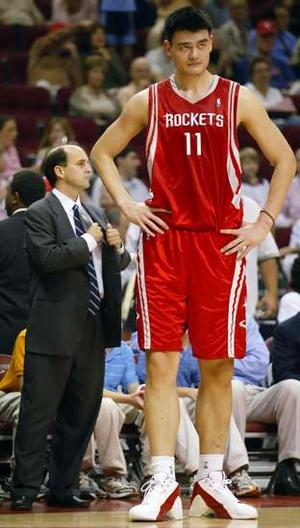
The Rockets. Again, at one point the Rockets had a very recognizeable logo and colorscheme with red, white and yellow trim. In the mid 90s, the Rockets thought, why not just do blue? Notwithstanding the Pistons, Mavericks, Warriors, Timberwolves, Nuggets, Magic, Pacers, Knicks and Nets, there's just not enough teams with blue. Lets also throw in pinstripes. And boom....there it is... the first ever NBA uniform doubling as summertime pajamas. Drop the microphone and walk off the stage. But now come back on the stage, and throw out this logo, which could have easily originally been pushed as the logo for Raw, a now defunct MMA clothing line. Look, the new uniforms are an improvement, but how long will it last? How amazing would it be if the new mascot of the Rockets was Elton John and he designed different uniforms every night. He would play Rocketman before each game and then sit on the bench with the team, delivering water and towels to perspiring players while unnerving everyone in the process. Just an idea.
I could go on like this about the Hawks, Bucks, Warriors, Suns and a number of other teams as well. The bottom line is, when the players are all different, the colors change, and the logo keeps getting updated, what is it fans are rooting for? Their city? Themselves?
In conclusion, I was a dominant 8th grade basketball player.
In a recent ESPN column, Len Pasquarelli correctly avers that fan loyalty in the NFL is eroded by rampant free agency. And while free agency is a problem in football, the NFL has taken steps to limit its effects and maintain continuity in other ways. The primary way the NFL does this is by keeping uniforms, colors and logos constant. NFL teams can only adjust their uniforms every 5 years, and typically uniform changes are minor. For example, among teams existing in the same city for each of the last 20 years, only the Patriots (before and after), Broncos (before and after), Falcons (before and after) and Buccaneers (before and after) instituted major changes to their uniforms and logos, and all except the Bucs maintained the same team colors. During that time period, 3 teams (ignoring the Cleveland-Baltimore situation) changed cities - the Raiders moved from Los Angeles to Oakland and kept their uniforms the same, the Rams moved from Los Angeles to St. Louis and maintained the same logo and essentially the same colors and the Houston Oilers becamse the Tennessee Titans, changing the logo but maintaing the same color scheme. Continuity of team colors and uniforms may seem minor, but I believe it explains a lot about fan loyalty in a time when players can move from team to team very quickly.
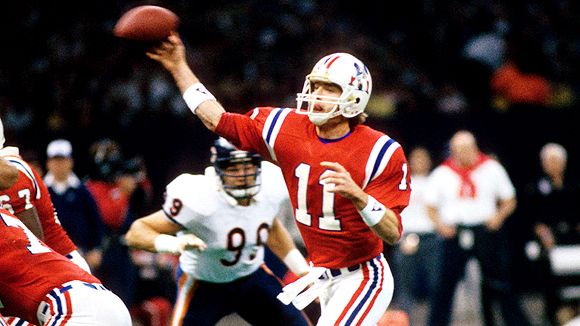


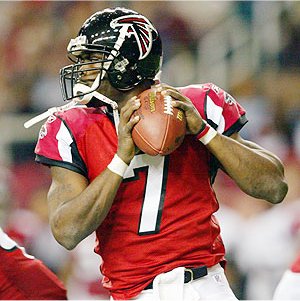
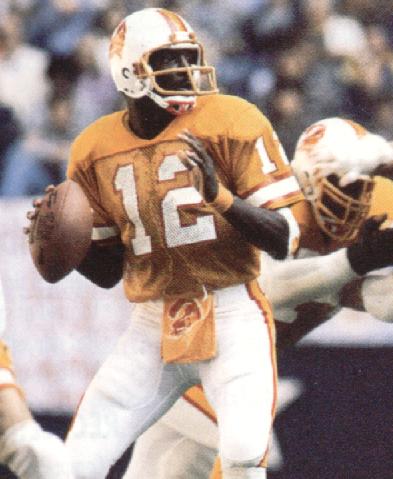


It is also interesting to juxtapose this against the fly-by-night circus act that has become the NBA. In addition to the much worse free agency problem the NBA has (just look at the number of top players that will likely change cities in the next 2 years), the teams change their outfits like an 19 year old sorority girl whose jeans don't fit before the PiKa - Delta Gamma Tailgate. Literally the only difference is that lip gloss is not as much of an issue to the NBA players...or is it?
In the last 20 years, the only teams to NOT have had major changes to their uniforms are the Knicks, Celtics, Bulls, Spurs, Clippers and Lakers. For the other teams, it has been a total free for all. The worst offenders?
The Cavs used to have perfectly normal uniforms in the late 80s and early 90s, with instantly recognizeable orange and blue colors. Then, in 1995, they suddenly started wearing this. One day, someone said - why not start wearing maroon and gold? So now they do! But also sometimes they'll wear blue. Whatever - no rules!


The Nuggets had my favorite logo and uniform design of any team in the NBA, and maybe in all of professional sports. But why stick with unique and well liked when you can have plain and uninspiring? Then, a few years later, a marketing person thought - Now lets confound everyone with a totally new logo and color scheme! In 2010, the Nuggets will be unveiling their new logo - a small, very small asian cat named Nugget. The colors will change daily, but the players will all be asked to have crazy hair.


The Rockets. Again, at one point the Rockets had a very recognizeable logo and colorscheme with red, white and yellow trim. In the mid 90s, the Rockets thought, why not just do blue? Notwithstanding the Pistons, Mavericks, Warriors, Timberwolves, Nuggets, Magic, Pacers, Knicks and Nets, there's just not enough teams with blue. Lets also throw in pinstripes. And boom....there it is... the first ever NBA uniform doubling as summertime pajamas. Drop the microphone and walk off the stage. But now come back on the stage, and throw out this logo, which could have easily originally been pushed as the logo for Raw, a now defunct MMA clothing line. Look, the new uniforms are an improvement, but how long will it last? How amazing would it be if the new mascot of the Rockets was Elton John and he designed different uniforms every night. He would play Rocketman before each game and then sit on the bench with the team, delivering water and towels to perspiring players while unnerving everyone in the process. Just an idea.





I could go on like this about the Hawks, Bucks, Warriors, Suns and a number of other teams as well. The bottom line is, when the players are all different, the colors change, and the logo keeps getting updated, what is it fans are rooting for? Their city? Themselves?
In conclusion, I was a dominant 8th grade basketball player.
Monday, February 23, 2009
Art Ombudsman: The Fakeness

Sometimes it isn't art.
Last night's Oscars got TWO thinking... Who decides what's art - or, more precisely, good art? The Oscars are decided by people with in the industry, and so it risks a disconnect with the people, educated or not, who are outside of it. BUT...since TWO's favorite movie, Slumdog Millionaire, won 8 awards, this won't be a commentary on the Oscars.
But it will be a commentary on something else purported to be art and the validation of the same. New York Magazine recently gave us a page on these people. The article title is quite accurate "I Go Out. I See Friends. I Take Pictures. I Post Them." The sub-heading is more questionable: "Their art is the party. Their gallery is the Internet. Four young photographers who live behind the lens."
Is this art?
TWO will not attempt to provide an all encompassing definition of art, but will be satiated if, taken as a whole, the pictures on the above sites are creative and could reasonably promote an intelligent dialogue regarding their content and meaning. All four of the sites mentioned, hanuk, hobogestapo, theskullset and nickydigital are similar in that they go to exclusive hipster night spots and take pictures. It should be noted that of the 20 pictures highlighted specifically by the article, 4 are taken at Beatrice Inn. For those who don't know, Beatrice is to hipsters what Bar Martignetti is to people who wear nantucket red pants and CK Bradley belts. That is, it is the damn Super Bowl of their genre....Beatrice is where the hipsters are at their hipsterest. Every day a hipster isn't at Beatrice is a day he's thinking about his next Beatrice outing...is this painter's hat funny, or is it a cliche now? Maybe I'll ironically wear a tie. Are my children's sunglasses clever, or is that a cliche too? Is it ever too warm to wear a scarf? The Bar Martinetti types are the same way...only different. What pastels are appropriate in the winter? Should I wear my shirt tucked in or especially tucked in? Where are the socks I wear with my ferragamo loafershahahajust kidding I never wear socks with my 'gamos. Incidentally, in 2005, a crew of Trinity College alums on their way to Martignetti stumbled across a band of NYU alums going to Beatrice....the horrible brawl that ensued was so intense that a mini big-bang occurred, resulting in both the creation of skinny jeans and an instantaneous joint Morrissey - O.A.R. shared stage concert, baffling and sedating all combatants. True story.
Anyway, back to the point. Look at the four websites....do you see art...or do you see party pictures? TWO sees the latter. While Hobo Gestappo says that they "don't just toss anything up" on the site, a look at the content would suggest otherwise. While there may be individual pictures that have some artistic merit, I think it is improper to judge those outside the context of the full body of work. The fact is, one out of a hundred pictures anyone takes might have some artisitic value, just by luck. A UGA sorority girl, taking pictures at her TriDelt - SAE Crush Night 2009 Party on Broad Street might take one picture where the lighting, shadows, positioning and facial expressions are absolutely striking. That doesn't mean that she can hand me the stack of 100 photos from that night, mostly depicting her friends sweating and holding dixie cups, and say "Here's the art."
Fake art?
TWO contends above that the content of the four above sites is party pictures...essentially indistinguishable from that which you'd find on New Jersey Guido, Chicago Scene, Patrick McMullan or Last Night's Party. What is distinguishable? The people. The unspoken message in this New York Magazine piece is that these pictures have artistic value because their subjects are fashion forward, artistically advanced people...and the pictures on New Jersey Guido have no value, because the pictures are of guidos. Who makes this call? Well, the fashion market editor of New York Magazine, who likely knows these photographers already from hanging out at Beatrice. It is a classic example of a niche group validating itself...if you are accepted into the world of New York's artists and hipsters, anything you do is art. The circularity is clear... Jack Siegel is an artist because his party pictures are art...and his party pictures are art because he's an artist.
To tie this together, I don't believe that the body of work is sufficiently creative nor dialogue inducing to justify the classification as art. TWO's body of work, however, clearly is. I would also challenge any of these photographers to a Madden 2003 game on my Playstation 2. Just saying.
In conclusion, I once played a crazy game of poker.
Tuesday, February 17, 2009
CSPAN Ombudsman: Ranking Presidents, Roxette
Who's the best?
In response to overwhelming public demand, CSPAN got 65 historians to take time off from their schedules to let Americans know which Presidents have been the best. A helpful article accompanies this with the breaking news that Lincoln is the top rated President. See also http://www.cnn.com/2009/POLITICS/02/16/presidential.survey/index.html .
I realize that we have somehow developed into a ranking society, where every show on E! and VH1 is a countdown of some kind, but the idea that a) Americans need their Presidents ranked for them and b) these rankings are definitive in any way is absurd.
As an indication of how silly this is, please read an actual excerpt: "....Bill Clinton jumped six spots from No. 21 to 15. Other recent presidents moved positions as well: Ronald Reagan advanced from No. 11 to 10, George H.W. Bush from No. 20 to 18 and Jimmy Carter fell from No. 22 to 25." Now read that again in Casey Kasem's voice, and replace Bill Clinton with Richard Marx, Ronald Reagan with Boy Meets Girl, Bush with The Bangles and Carter with Roxette, and this could be a 1989 American Top 40 transcript. But why are these Presidents advancing and falling? Either they were good or they weren't, but their performances haven't changed. What has George Washington done to deserve being dropped in the rankings? The explanation that "Today's concerns shape our views of the past..." by one of the historians does more to discredit the rankings than explain them... to judge Thomas Jefferson's presidency in light of, for example, the 2009 financial crisis, is the height of anachronism and revisionist history.
Second, and I won't go overboard in analysis here...but a couple of the rankings were very surprising. John F. Kennedy ranking 7th, ahead of Jefferson, Eisenhower, Wilson and Reagan is absurd. Kennedy was (tragically) only able to serve 3 years, and during that time did not have a particularly stellar record (see, eg the Bay of Pigs Fiasco). It is hard to defend his 3 year performance as exceeding that of so many well regarded two term presidents. Second, Jimmy Carter ranking 25th, essentially middle of the pack, is even more egregious. Jimmy Carter steered the country towards a period of high unemployment, low growth and dangerously high inflation. He received epicly low approval ratings and was internationally embarrassed by the Iran Hostage Crisis. Carter managed to win only 6 states and the District of Columbia in his 1980 reelection bid. However, Carter was ranked ahead of people like Richard Nixon (who, while far from perfect, served two terms and was popular enough to win his reelection in one of the greatest landslides in American history), Zachary Taylor (who had an effective Presidency shortened by death) and James Garfield (who only served for four months and didn't have time to lead the nation into ruin, like Carter did).
More importantly, I would like to announce that CSPAN will be teaming with VH1 to create the following jointly produced shows, to air on both networks:
1) Top 10 Totally Unbelievable Invasions. Hosted by Daisey Fuentes, historians rank various sneak attack military operations, from the fall of Troy to Quantrill's Raiders to Normandy as Michael Ian Black ("I mean, to the Germans, Eisenhower is like the anti-David Hasselhoff!!! And so is Omar Bradley!"), among others, provide commentary. Into and out of commercial breaks, the chorus to EMF's Unbelievable plays as the show's title graphic appears. From the actual show transcript...Historian: "After Ghengis Khan's invasion of Volga Bulgaria, he set his sights on Hungary, after physically crushing Russian princes to death under his eating platform" Sinbad: "DAMN!"
2) Top 30 Most Influential Christians. With quick cuts and Swizz Beatz tracks playing in the background, CSPAN/VH1 counts down through St. Augustine, various Popes, St. Peter and others. Spoiler Alert! Jesus falls one spot to #2 as host Giuliana Rancic explains that, quite simply, Jesus' name recognition has been diluted by the sheer number of Mexican boxers of the same name ("Dios Mio!" quips celebrity commenter George Lopez). Some Christian leaders attending a pre-screening have questioned Apostle Paul's #1 ranking, contending that Jesus is the central figure in their religion, but CSPAN/VH1 stands by its rating process.
3) All Access: 20 Most Controversial Supreme Court Decisions. Brooke Burke is all about controversy as she counts down an explosive list of court cases with comments from a star-studded group of celebrities. The list is comprehensive, from Plessy v. Ferguson ("That $#!* was %@#*@# up" - Ice T) to Roe v. Wade ("YEAH!" - Linda Perry) to, of course, Church of Lukumi Babalu Aye v. City of Hialeah ("That ordinance was neutral but was improperly motivated and thus had to be narrowly tailored to meet a compelling governmental interest!" - Tracy Morgan).
In conclusion, Roxette is a severely underrated 80s band.
In response to overwhelming public demand, CSPAN got 65 historians to take time off from their schedules to let Americans know which Presidents have been the best. A helpful article accompanies this with the breaking news that Lincoln is the top rated President. See also http://www.cnn.com/2009/POLITICS/02/16/presidential.survey/index.html .
I realize that we have somehow developed into a ranking society, where every show on E! and VH1 is a countdown of some kind, but the idea that a) Americans need their Presidents ranked for them and b) these rankings are definitive in any way is absurd.
As an indication of how silly this is, please read an actual excerpt: "....Bill Clinton jumped six spots from No. 21 to 15. Other recent presidents moved positions as well: Ronald Reagan advanced from No. 11 to 10, George H.W. Bush from No. 20 to 18 and Jimmy Carter fell from No. 22 to 25." Now read that again in Casey Kasem's voice, and replace Bill Clinton with Richard Marx, Ronald Reagan with Boy Meets Girl, Bush with The Bangles and Carter with Roxette, and this could be a 1989 American Top 40 transcript. But why are these Presidents advancing and falling? Either they were good or they weren't, but their performances haven't changed. What has George Washington done to deserve being dropped in the rankings? The explanation that "Today's concerns shape our views of the past..." by one of the historians does more to discredit the rankings than explain them... to judge Thomas Jefferson's presidency in light of, for example, the 2009 financial crisis, is the height of anachronism and revisionist history.
Second, and I won't go overboard in analysis here...but a couple of the rankings were very surprising. John F. Kennedy ranking 7th, ahead of Jefferson, Eisenhower, Wilson and Reagan is absurd. Kennedy was (tragically) only able to serve 3 years, and during that time did not have a particularly stellar record (see, eg the Bay of Pigs Fiasco). It is hard to defend his 3 year performance as exceeding that of so many well regarded two term presidents. Second, Jimmy Carter ranking 25th, essentially middle of the pack, is even more egregious. Jimmy Carter steered the country towards a period of high unemployment, low growth and dangerously high inflation. He received epicly low approval ratings and was internationally embarrassed by the Iran Hostage Crisis. Carter managed to win only 6 states and the District of Columbia in his 1980 reelection bid. However, Carter was ranked ahead of people like Richard Nixon (who, while far from perfect, served two terms and was popular enough to win his reelection in one of the greatest landslides in American history), Zachary Taylor (who had an effective Presidency shortened by death) and James Garfield (who only served for four months and didn't have time to lead the nation into ruin, like Carter did).

More importantly, I would like to announce that CSPAN will be teaming with VH1 to create the following jointly produced shows, to air on both networks:
1) Top 10 Totally Unbelievable Invasions. Hosted by Daisey Fuentes, historians rank various sneak attack military operations, from the fall of Troy to Quantrill's Raiders to Normandy as Michael Ian Black ("I mean, to the Germans, Eisenhower is like the anti-David Hasselhoff!!! And so is Omar Bradley!"), among others, provide commentary. Into and out of commercial breaks, the chorus to EMF's Unbelievable plays as the show's title graphic appears. From the actual show transcript...Historian: "After Ghengis Khan's invasion of Volga Bulgaria, he set his sights on Hungary, after physically crushing Russian princes to death under his eating platform" Sinbad: "DAMN!"
2) Top 30 Most Influential Christians. With quick cuts and Swizz Beatz tracks playing in the background, CSPAN/VH1 counts down through St. Augustine, various Popes, St. Peter and others. Spoiler Alert! Jesus falls one spot to #2 as host Giuliana Rancic explains that, quite simply, Jesus' name recognition has been diluted by the sheer number of Mexican boxers of the same name ("Dios Mio!" quips celebrity commenter George Lopez). Some Christian leaders attending a pre-screening have questioned Apostle Paul's #1 ranking, contending that Jesus is the central figure in their religion, but CSPAN/VH1 stands by its rating process.
3) All Access: 20 Most Controversial Supreme Court Decisions. Brooke Burke is all about controversy as she counts down an explosive list of court cases with comments from a star-studded group of celebrities. The list is comprehensive, from Plessy v. Ferguson ("That $#!* was %@#*@# up" - Ice T) to Roe v. Wade ("YEAH!" - Linda Perry) to, of course, Church of Lukumi Babalu Aye v. City of Hialeah ("That ordinance was neutral but was improperly motivated and thus had to be narrowly tailored to meet a compelling governmental interest!" - Tracy Morgan).
In conclusion, Roxette is a severely underrated 80s band.
Thursday, February 12, 2009
Boxing Ombudsman: Missing You Like Candy
The Worlds Ombudsman se gusta el boxeo.
I am tired of the casual, unchallenged references by people that "boxing is in a decline." You can find such references to boxing's death on blogs and mainstream sites alike, and almost always it is accompanied by no statistics or even explanation: Boxing is in a decline, everyone knows it, and mixed martial arts (MMA) is so much more popular.
First - its not - boxing is by far still the more popular sport and is quite healthy. And second, there may be no sport with as many intriguing but under-publicized characters as there are in boxing.
Boxing is popular. Last month's Mosely-Margarito fight brought nearly 21,000 fans to the Staples Center in LA - the largest crowd to see any sporting event in the building's history (and this is the building where the Lakers play their home games). Boxing matches regularly get well over 1 million PPV buys (including a record of 2.4 million) while MMA's largest ever is 1.3 million. What about remuneration? Margarito and Mosely made $2.3 million and $1 million respectively for the aforementioned fight (although keep in mind that De La Hoya has made $45 million off of his fight with Floyd Mayweather). By comparison, the recent George St. Pierre - BJ Penn MMA fight paid those fighters $600,000 and $125,000 respectively. In 2008, Floyd Mayweather Jr. was the fourth highest paid athlete in the US - between Lebron James and Kobe Bryant.
And that is just in the US. Around the world, boxing is thriving. In Mexico, boxing regularly gets better TV audiences than soccer -- and as for live audiences in that country - 136,000 people saw Julio Cesar Chavez fight Greg Haugen in 1993, one of the largest crowds in history, for any sport. In the UK, Ricky Hatton drew 55,000 to Manchester Stadium for his fight with Juan Lazcano and believes that he will be able to break 136,000 given the right venue. Meanwhile, Manny Pacquaio is quite literally the Michael Jordan of the Philippines.
In addition to being the best sport to pre-game to on a Saturday night, boxing also has some incredible storylines. Many of these story lines are routinely ignored by the mainstream US media, which is the driving force behind the claim that boxing is declining. Refuse to cover enough stories, and maybe the prophecy will be self-fulfilling. But not yet.
Here are 5 boxers that have intriguing stories... if the press were doing its job, all but Miranda would be household names in this country in the same way that Lebron James, Tom Brady and Derrick Jeter are.
1) The Ageless Bernard Hopkins. The Philadelphia native was sentenced to prison by his 18th birthday for countless muggings and burglaries. Upon leaving, he told the skeptical warden "I ain't coming back." After deciding that boxing would be his salvation, he had his first fight in 1988...and lost. Twenty years later, he is considered one of boxing's all-time greats. This past October, at age 43, as many boxing pundits were predicting his retirement, Hopkins shocked the world when he upset 26 year old previously undefeated middleweight champion Kelly Pavlik. How can you not love this? The only age gap that surprised me more was today when I learned that my girl Mandy Moore is engaged to Bryan Adams. Weird.
2) The Columbian Slumdog Millionaire, Edison Miranda. Miranda was abandoned by his mother at one month old and essentially grew up as a street child in Buenaventura, eating stray cats and stealing to survive. At age 9 he was able to save enough money to search for and locate his mother in the countryside, only to have her reject him again. Back in the city, he began boxing at a local gym because they would let him sleep there. Fast forward 10 years -he's making six figures to knock people out of the ring. Speaking of rings, at least Freida Pinto is still available - go to hell Bryan Adams.
3) Manny Pacquaio, The People's Champ. The Pacman rose from poverty to be widely considered the pound-for-pound best fighter in the world as well as easily the most widely recognized celebrity in the Philippines. Pacquiao has funded countless medical clinics, schools and infrastructure work in poor areas in the Phillipines, including at one point coming back from a fight and actually handing out money to thousands of people in a poor neighborhood. So popular is Pacman, that he has already acted in movies, starred in a video game, appeared on a postage stamp and run for congress. In December he moved up significantly in weight to fight Oscar De La Hoya. Most experts predicted an easy win for the bigger De La Hoya, instead it was one of the most surprisingly one-sided fights in recent memory, as Pacquaio utterly dominated the fight, likely ending De La Hoya's career. Pacquaio is scheduled to fight Ricky Hatton in May. There have been no discussions, to my knowledge, about a future fight with the other People's Champ, Paul Wall. Paul Wall, incidentally, is the jeweler behind Mandy's engagement grill. Fact.
4) Ricky Hatton, the Everyman. Hatton, a fighter from Manchester, England, has a band of soccer-turned-boxing hooligans who follow him all over the world, drunkenly singing, pounding drums and blowing horns. Sometimes they show up at events having nothing to do with boxing and do this. Hatton, himself, is just as amusing. Accused of drinking and eating too much between fights, Hatton regularly shows up for weigh ins (and even matches) wearing a fat suit and calling himself Ricky Fatton. For reasons known only to him, he calls himself an honorary Mexican and wears a sombrero when entering the ring while Blue Moon, the Manchester City song, plays on the loudspeakers. Also, he is nasty - 45 wins with only one loss (to Floyd Mayweather). Speaking of nasty, I'm still having trouble stomaching the Mandy Moore - Ryan Cabrera news. Cabrera's twin brother, Steelers place kicker Jeff Reed, is reportedly handling bachelor party duties.
5) Pretty Boy Floyd Mayweather. One of the best boxers ever and one of the most polarizing figures in all of sports, Mayweather is undefeated, untied and technically retired. But his love of money and royal treatment lead most pundits to believe that he'll be back, probably to fight Manny Pacquaio, if Pacman can beat Hatton. How much does Floyd love money? Here's him counting sweaty packets of money he keeps in a drawer and putting them in a big duffel bag, just because. My favorite part is that at one point Floyd, apparently worried that a viewer may have just tuned in and become confused and disoriented by what he or she was seeing, helpfully says "Thats seven hundred thousand... in a bag." And that's exactly what you're seeing...just bringing everyone up to speed. Is this jewels in a satchel? Is this travellers cheques in a box? Is this gold bullion in a rucksack? What is this I'm seeing? No no no...this is seven hundred thousand...in a bag. From Dancing With The Stars, to bizarre outings with 50 cent (you'll notice Ryan Cabrera mc-ing in that clip -- come ON Mandy) Mayweather loves attention and will likely be fighting soon - stay tuned.
In conclusion, I challenge any singer on the current Billboard Adult/Contemporary Top 40 to a slap fight. You hear me Jason Mraz?
I am tired of the casual, unchallenged references by people that "boxing is in a decline." You can find such references to boxing's death on blogs and mainstream sites alike, and almost always it is accompanied by no statistics or even explanation: Boxing is in a decline, everyone knows it, and mixed martial arts (MMA) is so much more popular.
First - its not - boxing is by far still the more popular sport and is quite healthy. And second, there may be no sport with as many intriguing but under-publicized characters as there are in boxing.
Boxing is popular. Last month's Mosely-Margarito fight brought nearly 21,000 fans to the Staples Center in LA - the largest crowd to see any sporting event in the building's history (and this is the building where the Lakers play their home games). Boxing matches regularly get well over 1 million PPV buys (including a record of 2.4 million) while MMA's largest ever is 1.3 million. What about remuneration? Margarito and Mosely made $2.3 million and $1 million respectively for the aforementioned fight (although keep in mind that De La Hoya has made $45 million off of his fight with Floyd Mayweather). By comparison, the recent George St. Pierre - BJ Penn MMA fight paid those fighters $600,000 and $125,000 respectively. In 2008, Floyd Mayweather Jr. was the fourth highest paid athlete in the US - between Lebron James and Kobe Bryant.
And that is just in the US. Around the world, boxing is thriving. In Mexico, boxing regularly gets better TV audiences than soccer -- and as for live audiences in that country - 136,000 people saw Julio Cesar Chavez fight Greg Haugen in 1993, one of the largest crowds in history, for any sport. In the UK, Ricky Hatton drew 55,000 to Manchester Stadium for his fight with Juan Lazcano and believes that he will be able to break 136,000 given the right venue. Meanwhile, Manny Pacquaio is quite literally the Michael Jordan of the Philippines.
In addition to being the best sport to pre-game to on a Saturday night, boxing also has some incredible storylines. Many of these story lines are routinely ignored by the mainstream US media, which is the driving force behind the claim that boxing is declining. Refuse to cover enough stories, and maybe the prophecy will be self-fulfilling. But not yet.
Here are 5 boxers that have intriguing stories... if the press were doing its job, all but Miranda would be household names in this country in the same way that Lebron James, Tom Brady and Derrick Jeter are.
1) The Ageless Bernard Hopkins. The Philadelphia native was sentenced to prison by his 18th birthday for countless muggings and burglaries. Upon leaving, he told the skeptical warden "I ain't coming back." After deciding that boxing would be his salvation, he had his first fight in 1988...and lost. Twenty years later, he is considered one of boxing's all-time greats. This past October, at age 43, as many boxing pundits were predicting his retirement, Hopkins shocked the world when he upset 26 year old previously undefeated middleweight champion Kelly Pavlik. How can you not love this? The only age gap that surprised me more was today when I learned that my girl Mandy Moore is engaged to Bryan Adams. Weird.
2) The Columbian Slumdog Millionaire, Edison Miranda. Miranda was abandoned by his mother at one month old and essentially grew up as a street child in Buenaventura, eating stray cats and stealing to survive. At age 9 he was able to save enough money to search for and locate his mother in the countryside, only to have her reject him again. Back in the city, he began boxing at a local gym because they would let him sleep there. Fast forward 10 years -he's making six figures to knock people out of the ring. Speaking of rings, at least Freida Pinto is still available - go to hell Bryan Adams.

3) Manny Pacquaio, The People's Champ. The Pacman rose from poverty to be widely considered the pound-for-pound best fighter in the world as well as easily the most widely recognized celebrity in the Philippines. Pacquiao has funded countless medical clinics, schools and infrastructure work in poor areas in the Phillipines, including at one point coming back from a fight and actually handing out money to thousands of people in a poor neighborhood. So popular is Pacman, that he has already acted in movies, starred in a video game, appeared on a postage stamp and run for congress. In December he moved up significantly in weight to fight Oscar De La Hoya. Most experts predicted an easy win for the bigger De La Hoya, instead it was one of the most surprisingly one-sided fights in recent memory, as Pacquaio utterly dominated the fight, likely ending De La Hoya's career. Pacquaio is scheduled to fight Ricky Hatton in May. There have been no discussions, to my knowledge, about a future fight with the other People's Champ, Paul Wall. Paul Wall, incidentally, is the jeweler behind Mandy's engagement grill. Fact.

4) Ricky Hatton, the Everyman. Hatton, a fighter from Manchester, England, has a band of soccer-turned-boxing hooligans who follow him all over the world, drunkenly singing, pounding drums and blowing horns. Sometimes they show up at events having nothing to do with boxing and do this. Hatton, himself, is just as amusing. Accused of drinking and eating too much between fights, Hatton regularly shows up for weigh ins (and even matches) wearing a fat suit and calling himself Ricky Fatton. For reasons known only to him, he calls himself an honorary Mexican and wears a sombrero when entering the ring while Blue Moon, the Manchester City song, plays on the loudspeakers. Also, he is nasty - 45 wins with only one loss (to Floyd Mayweather). Speaking of nasty, I'm still having trouble stomaching the Mandy Moore - Ryan Cabrera news. Cabrera's twin brother, Steelers place kicker Jeff Reed, is reportedly handling bachelor party duties.


5) Pretty Boy Floyd Mayweather. One of the best boxers ever and one of the most polarizing figures in all of sports, Mayweather is undefeated, untied and technically retired. But his love of money and royal treatment lead most pundits to believe that he'll be back, probably to fight Manny Pacquaio, if Pacman can beat Hatton. How much does Floyd love money? Here's him counting sweaty packets of money he keeps in a drawer and putting them in a big duffel bag, just because. My favorite part is that at one point Floyd, apparently worried that a viewer may have just tuned in and become confused and disoriented by what he or she was seeing, helpfully says "Thats seven hundred thousand... in a bag." And that's exactly what you're seeing...just bringing everyone up to speed. Is this jewels in a satchel? Is this travellers cheques in a box? Is this gold bullion in a rucksack? What is this I'm seeing? No no no...this is seven hundred thousand...in a bag. From Dancing With The Stars, to bizarre outings with 50 cent (you'll notice Ryan Cabrera mc-ing in that clip -- come ON Mandy) Mayweather loves attention and will likely be fighting soon - stay tuned.

In conclusion, I challenge any singer on the current Billboard Adult/Contemporary Top 40 to a slap fight. You hear me Jason Mraz?
Tuesday, February 10, 2009
The City Ombudsman: Less Tamarama Interruptions, Please!

After referencing Tila Tequila and Lady Gaga recently, I thought it was time to get back to serious issues like The City.
Lets talk about loyalty and double standards. A few weeks ago Adam made late night kissing with some girl who was not his girlfriend Allie. What followed? Two episodes of tears and gnashing of teeth...Whitney and Erin and Allie were all about the angry talk and using terms like "liar" and "cheater" and "guy who wears clownishly enormous v-necks to Tenjune." The last one wasn't actually said but is no less true. And MTV, for their part, used clips and angles that made Adam look like a creep. It was frankly surprising that there wasn't grainy footage of him pulling up to a lower east side elementary school in a van and offering kids snow cones before peeling out when he realized the camera was on him. But fine, you shouldn't cheat and lie.

However, over the last two episodes, Erin has been cheating on her long distance boyfriend with one "JR." I'm not sure what MTV is trying to imply when they show JR waking up at Erin's apartment and struggling to put on his youth medium Affliction tee shirt, but if one reads between the lines, I think they're suggesting that Erin and JR are doing more than just kissing. And by that I mean having relations. But is there condemnation? Is Erin shown cackling maniacally as she necks with JR with a quick cut to her Canadian boyfriend crying as All Out of Love plays? No. Instead she is treated with incredulous giggles from her girlfriends who want to know how she feels and what she wants. MTV makes her out to be sort of a lovable party girl who has this difficult boy situation! And the episode ends with her talking to JR and crying.
So to recap, Adam cheats on Allie, Allie cries. Erin cheats on her boyfriend, Erin cries. What? How can this be! While Adam's and Erin's situations aren't identical, the bottom line is: both cheated! However, one person is being treated like he did something wrong by cheating, and the other person is being treated as if they have just found themselves in a difficult situation and the cheating is just an unfortunate by-product. Unfair.
Do you know whats also unfair? My having to sit through two performances by Jay's Bananarama cover band and not getting to hear Venus.
That segues nicely into my other musing, which concerns the Hotel Gansevoort rooftop. Seriously? Not sure why one of the events had to take place here. I challenge you to find a place in Manhattan that has a lower percentage of Manhattan residents among its patrons. 230 5th in the summer is probably the only serious contender, when during happy hour the area code on the rooftop actually changes from 212 to 516. Hotel Gansevoort, meanwhile, is typically filled with 24 year old suit jacketed, slick haired guys from Hoboken who live with four other roommates. In between buying rounds of Patron shots for unsuspecting FIT first years, these dudes pass the time by blackberrying each other feverishly (mostly about when the other roommates are showing up and whether its time for more Patron). The point is, again, less Meatpacking District please!
So what have we learned today? Sometimes there are apparently double standards for cheating, and B&T loves rooftops.
In conclusion, I'm burning like a silver flame.
Wednesday, February 4, 2009
Celebrity Ombudsman: Michael Phelps = Tila Tequila

FINA, an international swimming organization, just issued a press release praising a swimmer for taking illegal drugs....and apologizing. Lets discuss.
Sometimes celebrities emerge through their own hard work and accomplishments, and sometimes celebrities are created through confusing magic and sorcery that results in them continually being on TV but no one knows why.
Michael Phelps is an interesting combination of the two. Phelps' performance in the Olympics obviously is an example of personal accomplishment being rewarded with fame. However, instead of Phelps staying "a swimming-celebrity", like a Mark Spitz sans sensual mustache, Phelps has turned into the second kind of celebrity. Why? Because sponsors and swimming organizations see that there is a lot of money to be earned off of him.
Ideally, Phelps would have become an icon naturally, due to a dynamic personality (like a Sugar Ray Leonard) or good looks (like an Anna Kournikova). But Phelps is sort of shy and didn't really catch on as a true celebrity. So the formula, to these Phelps-opportunists, is obvious...if it doesn't happen organically, force it. Force it like the 10,000th showing of the UnderArmor"I don't even know my power" commercial, force it like Carson Daly's blaccent interviewing Ludicrus ("Luduh, I mean, the the rhymes be flowin, the crowd be feeling it -"). Force it.

All of a sudden, well after the Olympics are over, we keep seeing Michael Phelps being paraded around in crooked hats. Just appearing places constantly: wandering around at various football games, dragged to fashion shows, forced onto Entourage. I'm pretty certain that I saw him get Next-ed by Amber, a spicy 19 year old from La Jolla ("You might have all them medals, but I ain't even trying to settle") but fare better with Tamra on a lascivious episode of Real Housewives of Orange County. And always in crooked hats.


So whats the point of this post? There should be a line between the behavior of sponsors and PR firms and that of governing bodies. After Michael Phelps smoked marijuana and apologized, FINA (a swimming organization certain to benefit if Michael Phelps can become like Michael Jordan) praised him for the apology as a means of damage control. Please note that there was never a separate condemnation press release - only this one that said it was inappropriate, but that he was great and that FINA hoped he would participate in their upcoming World Championships. FINA was more concerned about losing money with the fading of Phelps' star power than they were with making certain their athletes behave themselves.
After Pacman Jones made it rain all over a strip club in Las Vegas, prompting a riot and a shooting, did the NFL praise his apology and insist that the apology alone was a sufficient guarantee that he would "continue generating respect and admiration to fans"? [*Notice, by the way, that this is "to fans" and not "from fans." According to FINA, Phelps is a machine who just can not stop admiring and respecting the people who attend swimming events. Tirelessly respecting people.*] Anyway, no, the NFL suspended Jones for a year. The point is - the role of a body like FINA is to govern the sport and the behavior of its athletes, not to be a pseudo - PR firm protecting its big names. Shame on FINA and shame on Carson Daly.
In conclusion, I swim a very competitive breaststroke.
Wednesday, January 28, 2009
Cinema Ombudsman: Defiance = Ground Hog Day?
I recently viewed Defiance. It was good cinema.
The story was amazing, the movie was well done (if a bit long) and Daniel Craig was superb...all together it was somewhere between Casino Royale and Goldfinger. HAHAHA! Oh goodness. But moving on - it was a solid movie, but it is probably the 100th movie about the Holocaust in the last 10 years. For example, just this winter there is - in addition to Defiance - Valkyrie, The Reader, Adam Resurrected, Good and Boy In Striped Pajamas...all in major theaters, all about or directly relating to the Holocaust.
Page Six indicated that there may be a "demand" for this sort of movie reflected in Academy Awards. However, I'm not going to get into why so many of these movies are made - studios can pump out whatever movies they want....my question is - why is the public not more taken aback? Of all the things that have ever happened in the history of the world, why are we picking among 6 movies all related to the same event? Can you imagine if there were six movies coming out at one time all related to Stalin's Russia and the gulags? No one would know what was going on. Stunned movie-goers would be asking "Wait - Is this based on a true story?" "Kevin Connolly was SUPER as Trotsky!" and "What was Rosie Perez doing?"
On a serious note, do yourself a favor and read an excellent book - Koba The Dread by Martin Amis about that period in Russian history. I guarantee that you'll be shocked and, less importantly, it will further underscore the impetus for this post.
Moving on again, after I thought -- why so many Holocaust movies?...I thought to myself - what hasn't there been a movie about? Below are five intriguing true events you've never heard of - of all different types - and about which there should definitely be a movie. Note to Readers: If, upon reading the below list, you happen to think to yourself "My, The World's Ombudsman is truly a brilliant and fascinating fellow," please know that, while true, any inference drawn was from your own reading and was not implied in any way by TWO. I can also do 50 push ups without stopping.
1) The Great Northern War. It lasted 21 years, involved a lot of interesting personalities and was almost single-handedly started by a man who had been forced from his country and, in revenge, allied its enemies together to attack it. Steve Buscemi stars as Peter the Great, Phillip Seymour Hoffman as Johann Patkul and Nicole Kidman as Charles XII.
2) North Sentinel Island. Did you know there is an island full of people who have NEVER been touched by civilization? Aside from some brief 1970s attempts to contact them ending with someone getting shot with an arrow and their stabbing to death of some Indian fisherman who accidentally drifted onto their shores in 2007, there have been virtually no sightings of them, let alone contact. Sigourney Weaver is a rogue anthropolgist and is accompanied to the island by her reluctant and wise cracking assistant, Chris Tucker. There is an uncomfortable love scene.
3) Read this! One time this happened. A beautiful, mysterious woman checked into a hotel, danced her heart out, and then died in the arms of her last dance partner. Who was she? Where did she come from? What was she doing? No one knows. Beyonce Knowles and Channing Tatum heat up the screen.
4) Gangster Disciples. Everyone's heard of the Bloods and the Crips, but have you heard of GD? Started by a guy named Larry Hoover and another guy named David Barksdale, what began as a normal street gang now has over 60,000 members and its own political and military branches. Sidney Potier and Harry Belafonte are perhaps miscast as David Barksdale and Larry Hoover. Perhaps racistly miscast.
5) Anne Bonny, Mary Read and Calico Jack. Anne Bonny was a girl from Charleston, South Carolina in the 18th Century who fell in love with and married a pirate. She then had an affair with another pirate, named John "Calico Jack" Rackham. To get onto his boat, she posed as a man, her true identity known only by Calico. Later, he accused her of cheating on him with another pirate named Read with whom Anne had become close. It turned out this Read was actually ANOTHER woman who had disguised herself as a man. What sultry mischief and dangerous hi-jinx! Brianna Banks, Rachel Starr and Mr. Marcus as Anne Bonny, Mary Read and Calico Jack, respectively. This is a different type of movie.
Little humors aside, my point here is - so many interesting and intriguing things have happened. There are so many incredible and important stories to tell. While it is proposterous that Hollywood would come up with six movies at the same time related to the same topic, it is perhaps more alarming that this barely raised an eyebrow amongst audiences and reviewers.
In conclusion, I was an extra in Step Up 2: The Streets.
The story was amazing, the movie was well done (if a bit long) and Daniel Craig was superb...all together it was somewhere between Casino Royale and Goldfinger. HAHAHA! Oh goodness. But moving on - it was a solid movie, but it is probably the 100th movie about the Holocaust in the last 10 years. For example, just this winter there is - in addition to Defiance - Valkyrie, The Reader, Adam Resurrected, Good and Boy In Striped Pajamas...all in major theaters, all about or directly relating to the Holocaust.
Page Six indicated that there may be a "demand" for this sort of movie reflected in Academy Awards. However, I'm not going to get into why so many of these movies are made - studios can pump out whatever movies they want....my question is - why is the public not more taken aback? Of all the things that have ever happened in the history of the world, why are we picking among 6 movies all related to the same event? Can you imagine if there were six movies coming out at one time all related to Stalin's Russia and the gulags? No one would know what was going on. Stunned movie-goers would be asking "Wait - Is this based on a true story?" "Kevin Connolly was SUPER as Trotsky!" and "What was Rosie Perez doing?"
On a serious note, do yourself a favor and read an excellent book - Koba The Dread by Martin Amis about that period in Russian history. I guarantee that you'll be shocked and, less importantly, it will further underscore the impetus for this post.
Moving on again, after I thought -- why so many Holocaust movies?...I thought to myself - what hasn't there been a movie about? Below are five intriguing true events you've never heard of - of all different types - and about which there should definitely be a movie. Note to Readers: If, upon reading the below list, you happen to think to yourself "My, The World's Ombudsman is truly a brilliant and fascinating fellow," please know that, while true, any inference drawn was from your own reading and was not implied in any way by TWO. I can also do 50 push ups without stopping.
1) The Great Northern War. It lasted 21 years, involved a lot of interesting personalities and was almost single-handedly started by a man who had been forced from his country and, in revenge, allied its enemies together to attack it. Steve Buscemi stars as Peter the Great, Phillip Seymour Hoffman as Johann Patkul and Nicole Kidman as Charles XII.


2) North Sentinel Island. Did you know there is an island full of people who have NEVER been touched by civilization? Aside from some brief 1970s attempts to contact them ending with someone getting shot with an arrow and their stabbing to death of some Indian fisherman who accidentally drifted onto their shores in 2007, there have been virtually no sightings of them, let alone contact. Sigourney Weaver is a rogue anthropolgist and is accompanied to the island by her reluctant and wise cracking assistant, Chris Tucker. There is an uncomfortable love scene.
3) Read this! One time this happened. A beautiful, mysterious woman checked into a hotel, danced her heart out, and then died in the arms of her last dance partner. Who was she? Where did she come from? What was she doing? No one knows. Beyonce Knowles and Channing Tatum heat up the screen.
4) Gangster Disciples. Everyone's heard of the Bloods and the Crips, but have you heard of GD? Started by a guy named Larry Hoover and another guy named David Barksdale, what began as a normal street gang now has over 60,000 members and its own political and military branches. Sidney Potier and Harry Belafonte are perhaps miscast as David Barksdale and Larry Hoover. Perhaps racistly miscast.


5) Anne Bonny, Mary Read and Calico Jack. Anne Bonny was a girl from Charleston, South Carolina in the 18th Century who fell in love with and married a pirate. She then had an affair with another pirate, named John "Calico Jack" Rackham. To get onto his boat, she posed as a man, her true identity known only by Calico. Later, he accused her of cheating on him with another pirate named Read with whom Anne had become close. It turned out this Read was actually ANOTHER woman who had disguised herself as a man. What sultry mischief and dangerous hi-jinx! Brianna Banks, Rachel Starr and Mr. Marcus as Anne Bonny, Mary Read and Calico Jack, respectively. This is a different type of movie.

Little humors aside, my point here is - so many interesting and intriguing things have happened. There are so many incredible and important stories to tell. While it is proposterous that Hollywood would come up with six movies at the same time related to the same topic, it is perhaps more alarming that this barely raised an eyebrow amongst audiences and reviewers.
In conclusion, I was an extra in Step Up 2: The Streets.
Monday, January 26, 2009
ESPN Ombudsman: And the ESPY goes to Bill Simmons!
ESPN.com has no control over Bill Simmons - can it get worse?
Roughly 5 years ago, Bill Simmons, a man with literally no sports background, started writing ESPN columns from the "fan's point of view." Basically, his early columns were just his own humorous reactions and opinions on sports and related pop-culture. As these were well received, we got longer columns where Bill propounded inane theories and unburdened himself of various private musings and thoughts. Further validated by his growing readership and inferring that the public was fascinated with the minutia of his life, readers were introduced to his father, his wife and his college buddies, who would be quoted, at times extensively, in his columns. By 2006, a very self-confident Bill, who I will say again is a man with no sports background, got into public feuds with various NBA general managers. When, in 2008, he held out against ESPN's editing -essentially refusing to write - ESPN must have realized they'd created a monster. A guy who writes about himself (something that can't really be replicated) and who has the power to call the shots over the editors and higher-ups.
So what do you get when you combine a bizarre fascination with one's self, a validating group of readers, and the self-confidence that no one will edit what you write? You get the following - an article by Bill Simmons entirely about his dead dog. Now look, I had a dog that died, and I loved that dog. But if someone asked...IF someone asked...I would probably briefly mention his name, what kind of dog, when I had it and maybe one funny thing he used to do. One paragraph max. Bill Simmons, apropos of nothing, gives us 25 paragraphs about his dead dog. On a sports website. What could be more hubristic? What were the editors doing? And most importantly - what comes next? I have 5 column titles & ideas:
1) Good Night Neosporin. Wearing a McHale jersey, Bill bloodies his hand trying to dunk on an 8 and a half foot rim and must treat it with neosporin in order to avoid infection and scarring. Bill tells the story of being bullied in middle school and how he would eat some of the neosporin used to treat cuts and scrapes from these little tussles. 10,000 words later, Bill brings the story full circle and eats a little neosporin as he treats his hand
2) How 'Bout Them Apples? Bill podcasts from the grocery store and opens up to listeners about some problems he's had selecting fresh produce, his lactose intolerance and something he used to do with heated up banana peels in college.
3) Go To Hell, Dillan Moskowitz. Bill rips into one Dillan Moskowitz, a fat, slow, disgusting, racist third baseman on his son's tee ball team. Dillan, who incidentally starts over Simmons' son, probably takes creatine and is constantly peeing in his pants (Dillan's not Simmons').
4) Marcia & Tom & Something Else. Take an erotic and troubling journey with Bill as he talks about the two Bradys he thinks about in quiet moments as well as a story about a chance 1993 encounter with Oil Can Boyd in a Dunkin Donuts that begins with excitement and admiration but ends in prurience and shame.
5) Simmons - THE ONIONS! Bill spends 112 paragraphs spread over three weeks to detail his favorite sports daydreams about himself. Included in his opus is a daydream where Bill is the 7 foot tall Celtics center in Game 7 of the NBA Championship, and wins the title at the buzzer by dunking on Kobe Bryant so viciously that everyone in the arena suffers from dizziness and dry mouth, Kobe flies into the 3rd row of seats where several people are seriously hurt and the NBA cancels its 2009-10 season.
In conclusion, LeRoy Jenkins was the backup 3rd basemen on my tee ball team.
Roughly 5 years ago, Bill Simmons, a man with literally no sports background, started writing ESPN columns from the "fan's point of view." Basically, his early columns were just his own humorous reactions and opinions on sports and related pop-culture. As these were well received, we got longer columns where Bill propounded inane theories and unburdened himself of various private musings and thoughts. Further validated by his growing readership and inferring that the public was fascinated with the minutia of his life, readers were introduced to his father, his wife and his college buddies, who would be quoted, at times extensively, in his columns. By 2006, a very self-confident Bill, who I will say again is a man with no sports background, got into public feuds with various NBA general managers. When, in 2008, he held out against ESPN's editing -essentially refusing to write - ESPN must have realized they'd created a monster. A guy who writes about himself (something that can't really be replicated) and who has the power to call the shots over the editors and higher-ups.
So what do you get when you combine a bizarre fascination with one's self, a validating group of readers, and the self-confidence that no one will edit what you write? You get the following - an article by Bill Simmons entirely about his dead dog. Now look, I had a dog that died, and I loved that dog. But if someone asked...IF someone asked...I would probably briefly mention his name, what kind of dog, when I had it and maybe one funny thing he used to do. One paragraph max. Bill Simmons, apropos of nothing, gives us 25 paragraphs about his dead dog. On a sports website. What could be more hubristic? What were the editors doing? And most importantly - what comes next? I have 5 column titles & ideas:
1) Good Night Neosporin. Wearing a McHale jersey, Bill bloodies his hand trying to dunk on an 8 and a half foot rim and must treat it with neosporin in order to avoid infection and scarring. Bill tells the story of being bullied in middle school and how he would eat some of the neosporin used to treat cuts and scrapes from these little tussles. 10,000 words later, Bill brings the story full circle and eats a little neosporin as he treats his hand
2) How 'Bout Them Apples? Bill podcasts from the grocery store and opens up to listeners about some problems he's had selecting fresh produce, his lactose intolerance and something he used to do with heated up banana peels in college.
3) Go To Hell, Dillan Moskowitz. Bill rips into one Dillan Moskowitz, a fat, slow, disgusting, racist third baseman on his son's tee ball team. Dillan, who incidentally starts over Simmons' son, probably takes creatine and is constantly peeing in his pants (Dillan's not Simmons').
4) Marcia & Tom & Something Else. Take an erotic and troubling journey with Bill as he talks about the two Bradys he thinks about in quiet moments as well as a story about a chance 1993 encounter with Oil Can Boyd in a Dunkin Donuts that begins with excitement and admiration but ends in prurience and shame.
5) Simmons - THE ONIONS! Bill spends 112 paragraphs spread over three weeks to detail his favorite sports daydreams about himself. Included in his opus is a daydream where Bill is the 7 foot tall Celtics center in Game 7 of the NBA Championship, and wins the title at the buzzer by dunking on Kobe Bryant so viciously that everyone in the arena suffers from dizziness and dry mouth, Kobe flies into the 3rd row of seats where several people are seriously hurt and the NBA cancels its 2009-10 season.
In conclusion, LeRoy Jenkins was the backup 3rd basemen on my tee ball team.
Subscribe to:
Posts (Atom)